PanCancer Studies
English
United States, Ashburn
Johns Hopkins University
数据描述
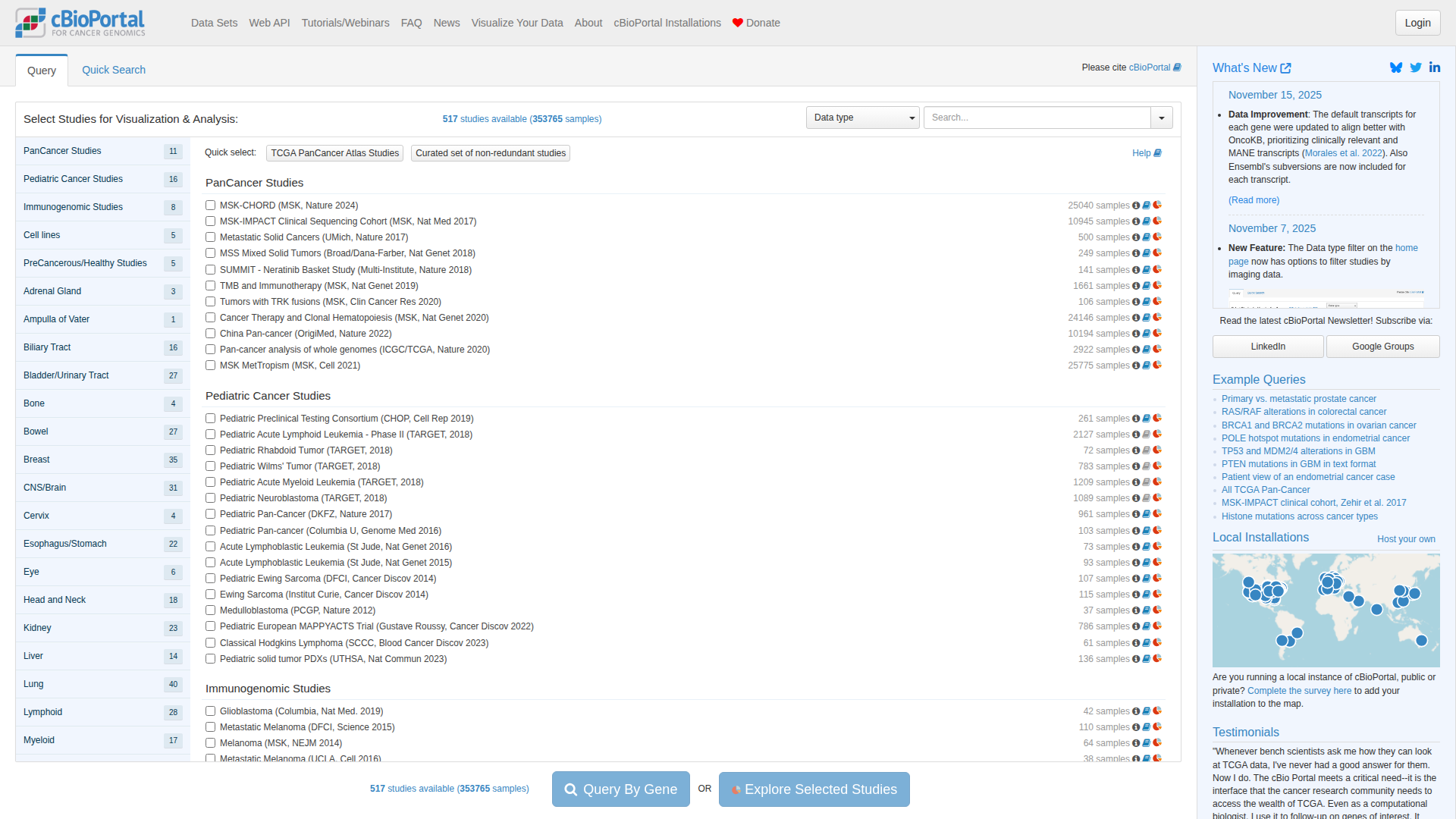
The dataset described in the text pertains to cBioPortal, a comprehensive resource that provides molecular profiling data across various cancer types. It includes thousands of samples from studies such as PanCancer, Pediatric Cancers, Immunogenomic Studies, Cell Lines, and more. These datasets contain detailed molecular information, including genomic alterations, gene expression, and clinical annotations. The platform aims to facilitate research and enable translational applications by offering access to harmonized data across diverse cancer types. Its purpose is to support the understanding of cancer biology, identify therapeutic targets, and aid in clinical decision-making.
www.cbioportal.org
IP: 54.152.167.197
加载中...
相关论文
151Cancer stem cell regulated phenotypic plasticity protects metastasized cancer cells from ferroptosis
Wu Mingming•Zhang Xiao•Zhang Weijie•Chiou Yi Shiou•Qian Wenchang等 16 人
Nature Communications
2022
•2022/3/16
•Vol.13 No.1 p.1-16
Cancer cells display phenotypic equilibrium between the stem-like and differentiated states during neoplastic homeostasis. The functional and mechanistic implications of this subpopulation plasticity remain largely unknown. Herein, it is demonstrated that the breast cancer stem cell (BCSC) secretome...
Breast cancerCancer stem cellsCancer therapyMetastasisTumour heterogeneity
10.1038/S41467-022-29018-9
ISSN:2041-1723
Alterations in PTEN and ESR1 promote clinical resistance to alpelisib plus aromatase inhibitors
Pedram Razavi•Maura N. Dickler•Payal D. Shah•Weiyi Toy•David N. Brown等 33 人
Nature Cancer
2020
•2020/3/23
•Vol.1 No.4 p.382-393
Alpelisib is a selective inhibitor of phosphoinositide 3-kinase (PI3K)α, shown to improve outcomes for PIK3CA-mutant, hormone receptor–positive metastatic breast cancers when combined with antiestrogen therapy. To uncover mechanisms of resistance, we conducted a detailed, longitudinal analysis of tu...
Breast cancerCancer genomicsCancer therapeutic resistanceTargeted therapiesTumour biomarkers
10.1038/S43018-020-0047-1
ISSN:2662-1347
Deep CRISPR mutagenesis characterizes the functional diversity of TP53 mutations
Julianne S. Funk•Maria Klimovich•Daniel Drangenstein•Ole Pielhoop•Pascal Hunold等 25 人
Nature Genetics
2025
•2025/1/7
•Vol.57 No.1 p.140-153
The mutational landscape of TP53, a tumor suppressor mutated in about half of all cancers, includes over 2,000 known missense mutations. To fully leverage TP53 mutation status for personalized medicine, a thorough understanding of the functional diversity of these mutations is essential. We conducte...
CancerClinical geneticsGenetic engineeringMutagenesis
10.1038/S41588-024-02039-4
ISSN:1061-4036
ALAN is a computational approach that interprets genomic findings in the context of tumor ecosystems
Bergom Hannah E.•Shabaneh Ashraf•Day Abderrahman•Ali Atef•Boytim Ella等 18 人
Communications Biology
2023
•2023/4/14
•Vol.6 No.1 p.1-12
Gene behavior is governed by activity of other genes in an ecosystem as well as context-specific cues including cell type, microenvironment, and prior exposure to therapy. Here, we developed the Algorithm for Linking Activity Networks (ALAN) to compare gene behavior purely based on patient -omic dat...
Cancer genomicsSoftware
10.1038/S42003-023-04795-1
ISSN:2399-3642
Massively parallel phenotyping of coding variants in cancer with Perturb-seq
Ursu Oana•Neal James T.•Shea Emily•Thakore Pratiksha I.•Jerby-Arnon Livnat等 21 人
Nature Biotechnology
2022
•2022/1/20
•00 p.1-10
Genome sequencing studies have identified millions of somatic variants in cancer, but it remains challenging to predict the phenotypic impact of most. Experimental approaches to distinguish impactful variants often use phenotypic assays that report on predefined gene-specific functional effects in b...
Cancer genomicsHigh-throughput screening
10.1038/S41587-021-01160-7
ISSN:1087-0156
The origins and genetic interactions of KRAS mutations are allele- and tissue-specific
Joshua H. Cook•Giorgio E. M. Melloni•Doga C. Gulhan•Peter J. Park•Kevin M. Haigis
Nature Communications
2021
•2021/3/22
•Vol.12 No.1 p.1-14
Mutational activation of KRAS promotes the initiation and progression of cancers, especially in the colorectum, pancreas, lung, and blood plasma, with varying prevalence of specific activating missense mutations. Although epidemiological studies connect specific alleles to clinical outcomes, the mec...
Cancer geneticsComputational biology and bioinformatics
10.1038/S41467-021-22125-Z
ISSN:2041-1723
ALOX12 is required for p53-mediated tumour suppression through a distinct ferroptosis pathway
Bo Chu•Ning Kon•Delin Chen•Tongyuan Li•Tong Liu等 9 人
Nature Cell Biology
2019
•2019/4/8
•Vol.21 No.5 p.579-591
It is well established that ferroptosis is primarily controlled by glutathione peroxidase 4 (GPX4). Surprisingly, we observed that p53 activation modulates ferroptotic responses without apparent effects on GPX4 function. Instead, ALOX12 inactivation diminishes p53-mediated ferroptosis induced by rea...
CancerCell deathTumour-suppressor proteins
10.1038/S41556-019-0305-6
ISSN:1465-7392
KRAS drives immune evasion in a genetic model of pancreatic cancer
Irene Ischenko•Stephen D’Amico•Manisha Rao•Jinyu Li•Michael J. Hayman等 8 人
Nature Communications
2021
•2021/3/5
•Vol.12 No.1 p.1-15
Immune evasion is a hallmark of KRAS-driven cancers, but the underlying causes remain unresolved. Here, we use a mouse model of pancreatic ductal adenocarcinoma to inactivate KRAS by CRISPR-mediated genome editing. We demonstrate that at an advanced tumor stage, dependence on KRAS for tumor growth i...
Cancer modelsCellular signalling networks
10.1038/S41467-021-21736-W
ISSN:2041-1723
Targeting the histone reader ZMYND8 inhibits antiandrogen-induced neuroendocrine tumor transdifferentiation of prostate cancer
Hanling Wang•Sulin Zhang•Qiang Pan•Jiacheng Guo•Ni Li等 24 人
Nature Cancer
2025
•2025/3/18
•00 p.1-18
The transdifferentiation from adenocarcinoma to neuroendocrine prostate cancer (NEPC) in men confers antiandrogen therapy resistance. Here our analysis combining CRISPR‒Cas9 screening with single-cell RNA sequencing tracking of tumor transition demonstrated that antiandrogen-induced zinc finger MYND...
CancerMechanisms of diseaseProstate cancer
10.1038/S43018-025-00928-Z
ISSN:2662-1347
Single-cell profiling defines the prognostic benefit of CD39high tissue resident memory CD8+ T cells in luminal-like breast cancer
Losurdo Agnese•Scirgolea Caterina•Alvisi Giorgia•Brummelman Jolanda•Errico Valentina等 16 人
Communications Biology
2021
•2021/9/22
•Vol.4 No.1 p.1-11
Luminal-like breast cancer (BC) constitutes the majority of BC subtypes, but, differently from highly aggressive triple negative BC, is poorly infiltrated by the immune system. The quality of the immune infiltrate in luminal-like BCs has been poorly studied, thereby limiting further investigation of...
Breast cancerImmunological memory
10.1038/S42003-021-02595-Z
ISSN:2399-3642
SAPCD2 promotes neuroblastoma progression by altering the subcellular distribution of E2F7
Zhang Zi-Mu•Cao Hai-Bo•Li Zhi-Heng•Zhuo Ran•Tao Yan-Fang等 23 人
Cell Death & Disease
2022
•2022/2/23
•Vol.13 No.2 p.1-11
Recent studies uncovered the emerging roles of SAPCD2 (suppressor anaphase-promoting complex domain containing 2) in several types of human cancer. However, the functions and underlying mechanisms of SAPCD2 in the progression of neuroblastoma (NB) remain elusive. Herein, through integrative analysis...
Cancer
10.1038/S41419-022-04624-Z
ISSN:2041-4889
The impact of site-specific digital histology signatures on deep learning model accuracy and bias
Frederick M. Howard•James Dolezal•Sara Kochanny•Jefree Schulte•Heather Chen等 13 人
Nature Communications
2021
•2021/7/20
•Vol.12 No.1 p.1-13
The Cancer Genome Atlas (TCGA) is one of the largest biorepositories of digital histology. Deep learning (DL) models have been trained on TCGA to predict numerous features directly from histology, including survival, gene expression patterns, and driver mutations. However, we demonstrate that these ...
Cancer imagingDiagnostic markers
10.1038/S41467-021-24698-1
ISSN:2041-1723
Bone morphogenetic protein 7 promotes resistance to immunotherapy
Maria Angelica Cortez•Fatemeh Masrorpour•Cristina Ivan•Jie Zhang•Ahmed I. Younes等 18 人
Nature Communications
2020
•2020/9/24
•Vol.11 No.1 p.1-14
Immunotherapies revolutionized cancer treatment by harnessing the immune system to target cancer cells. However, most patients are resistant to immunotherapies and the mechanisms underlying this resistant is still poorly understood. Here, we report that overexpression of BMP7, a member of the TGFB s...
Cancer immunotherapyCancer therapeutic resistance
10.1038/S41467-020-18617-Z
ISSN:2041-1723
Barcoded viral tracing identifies immunosuppressive astrocyte–glioma interactions
Brian M. Andersen•Camilo Faust Akl•Michael A. Wheeler•Zhaorong Li•Martin Diebold等 41 人
Nature
2025
•2025/6/25
•00 p.1-10
Glioblastoma (GBM) is the most lethal primary brain malignancy1. Immunosuppression in the GBM tumour microenvironment (TME) is an important barrier to immune-targeted therapies, but our understanding of the mechanisms of immune regulation in the GBM TME is limited2. Here we describe a viral barcode ...
Immune evasionTumour immunology
10.1038/S41586-025-09191-9
ISSN:0028-0836
Spatiotemporally resolved colorectal oncogenesis in mini-colons ex vivo
L. Francisco Lorenzo-Martín•Tania Hübscher•Amber D. Bowler•Nicolas Broguiere•Jakob Langer等 9 人
Nature
2024
•2024/4/24
•00 p.1-8
Three-dimensional organoid culture technologies have revolutionized cancer research by allowing for more realistic and scalable reproductions of both tumour and microenvironmental structures1–3. This has enabled better modelling of low-complexity cancer cell behaviours that occur over relatively sho...
Cancer modelsGastrointestinal cancerLab-on-a-chipTissue engineering
10.1038/S41586-024-07330-2
ISSN:0028-0836
TRIP13, identified as a hub gene of tumor progression, is the target of microRNA-4693-5p and a potential therapeutic target for colorectal cancer
Chen Yan•Chen Danqi•Qin Ying•Qiu Cheng•Zhou Yaoyao等 9 人
Cell Death Discovery
2022
•2022/1/24
•Vol.8 No.1 p.1-10
Colorectal cancer (CRC) is one of the digestive tract malignancies whose early symptoms are not obvious. This study aimed to identify novel targets for CRC therapy, especially early-stage CRC, by reanalyzing the publicly available GEO and TCGA databases. Thyroid hormone receptor interactor 13 (TRIP1...
OncogenesTumour biomarkers
10.1038/S41420-022-00824-W
ISSN:2058-7716
Integration of clinical features and deep learning on pathology for the prediction of breast cancer recurrence assays and risk of recurrence
Howard Frederick M.•Dolezal James•Kochanny Sara•Khramtsova Galina•Vickery Jasmine等 13 人
Npj Breast Cancer
2023
•2023/4/14
•Vol.9 No.1 p.1-6
Gene expression-based recurrence assays are strongly recommended to guide the use of chemotherapy in hormone receptor-positive, HER2-negative breast cancer, but such testing is expensive, can contribute to delays in care, and may not be available in low-resource settings. Here, we describe the train...
Breast cancerPrognostic markersTranslational research
10.1038/S41523-023-00530-5
ISSN:2374-4677
Structure-based classification predicts drug response in EGFR-mutant NSCLC
Robichaux Jacqulyne P.•Le Xiuning•Vijayan R. S. K.•Hicks J. Kevin•Heeke Simon等 33 人
Nature
2021
•2021/9/15
•00 p.1-6
Epidermal growth factor receptor (EGFR) mutations typically occur in exons 18–21 and are established driver mutations in non-small cell lung cancer (NSCLC)1–3. Targeted therapies are approved for patients with ‘classical’ mutations and a small number of other mutations4–6. However, effective therapi...
Non-small-cell lung cancerTargeted therapies
10.1038/S41586-021-03898-1
ISSN:0028-0836
MTSS1 suppresses mammary tumor-initiating cells by enhancing RBCK1-mediated p65 ubiquitination
Min Cong•Yuan Wang•Yang Yang•Cheng Lian•Xueqian Zhuang等 14 人
Nature Cancer
2020
•2020/1/20
•Vol.1 No.2 p.222-234
Tumor-initiating cells (TICs) are considered the culprits of cancer development and progression. Dysregulation of metastasis suppressor protein 1 (MTSS1) has been widely observed in tumor metastasis, but its functional contribution and mechanism in cancer is poorly understood. Here we report a role ...
Breast cancerCancerCancer stem cellsUbiquitylation
10.1038/S43018-019-0021-Y
ISSN:2662-1347
Disruption of the HER3-PI3K-mTOR oncogenic signaling axis and PD-1 blockade as a multimodal precision immunotherapy in head and neck cancer
Zhiyong Wang•Yusuke Goto•Michael M. Allevato•Victoria H. Wu•Robert Saddawi-Konefka等 15 人
Nature Communications
2021
•2021/4/22
•Vol.12 No.1 p.1-13
Immune checkpoint blockade (ICB) therapy has revolutionized head and neck squamous cell carcinoma (HNSCC) treatment, but <20% of patients achieve durable responses. Persistent activation of the PI3K/AKT/mTOR signaling circuitry represents a key oncogenic driver in HNSCC; however, the potential immun...
Cell signallingOral cancer
10.1038/S41467-021-22619-W
ISSN:2041-1723
Selective therapeutic strategy for p53-deficient cancer by targeting dysregulation in DNA repair
Justin Zonneville•Moyi Wang•Mohammed M. Alruwaili•Brandon Smith•Megan Melnick等 11 人
Communications Biology
2021
•2021/7/12
•Vol.4 No.1 p.1-12
Breast carcinomas commonly carry mutations in the tumor suppressor p53, although therapeutic efforts to target mutant p53 have previously been unfruitful. Here we report a selective combination therapy strategy for treatment of p53 mutant cancers. Genomic data revealed that p53 mutant cancers exhibi...
Breast cancerChemotherapy
10.1038/S42003-021-02370-0
ISSN:2399-3642
Equitable machine learning counteracts ancestral bias in precision medicine
Leslie A. Smith•James A. Cahill•Ji-Hyun Lee•Kiley Graim
Nature Communications
2025
•2025/3/10
•Vol.16 No.1 p.1-17
Gold standard genomic datasets severely under-represent non-European populations, leading to inequities and a limited understanding of human disease. Therapeutics and outcomes remain hidden because we lack insights that could be gained from analyzing ancestrally diverse genomic data. To address this...
Cancer geneticsCancer genomicsGenetic variationMachine learning
10.1038/S41467-025-57216-8
ISSN:2041-1723
Immunotherapy targeting different immune compartments in combination with radiation therapy induces regression of resistant tumors
Nils-Petter Rudqvist•Maud Charpentier•Claire Lhuillier•Erik Wennerberg•Sheila Spada等 12 人
Nature Communications
2023
•2023/8/24
•Vol.14 No.1 p.1-23
Radiation therapy (RT) increases tumor response to CTLA-4 inhibition (CTLA4i) in mice and in some patients, yet deep responses are rare. To identify rational combinations of immunotherapy to improve responses we use models of triple negative breast cancer highly resistant to immunotherapy in female ...
ImmunotherapyRadiotherapyTumour immunology
10.1038/S41467-023-40844-3
ISSN:2041-1723
Pancreatic cancer cells upregulate LPAR4 in response to isolation stress to promote an ECM-enriched niche and support tumour initiation
Wu Chengsheng•Rakhshandehroo Taha•Wettersten Hiromi I.•Campos Alejandro•von Schalscha Tami等 13 人
Nature Cell Biology
2023
•2023/1/16
•Vol.25 No.2 p.309-322
Defining drivers of tumour initiation can provide opportunities to control cancer progression. Here we report that lysophosphatidic acid receptor 4 (LPAR4) becomes transiently upregulated on pancreatic cancer cells exposed to environmental stress or chemotherapy where it promotes stress tolerance, d...
Cancer microenvironmentCancer stem cellsTumour biomarkers
10.1038/S41556-022-01055-Y
ISSN:1465-7392
KRAS mutation increases histone H3 lysine 9 lactylation (H3K9la) to promote colorectal cancer progression by facilitating cholesterol transporter GRAMD1A expression
Chi Zhang•Runfeng Yu•Senmao Li•Ming Yuan•Tuo Hu等 14 人
Cell Death & Differentiation
2025
•2025/7/24
•00 p.1-14
Histone lactylation is a novel epigenetic modification derived from lactate, but its role and mechanism in KRAS mutant colorectal cancer (CRC) progression remains to be fully elucidated. In this study, we first showed that mutant KRAS increased H3 lysine 9 lactylation (H3K9la) to promote CRC progres...
Cancer geneticsGenetics research
10.1038/S41418-025-01533-4
ISSN:1350-9047
The SWI/SNF chromatin remodeling complex helps resolve R-loop-mediated transcription–replication conflicts
Aleix Bayona-Feliu•Sonia Barroso•Sergio Muñoz•Andrés Aguilera
Nature Genetics
2021
•2021/5/13
•00 p.1-14
ATP-dependent chromatin remodelers are commonly mutated in human cancer. Mammalian SWI/SNF complexes comprise three conserved multisubunit chromatin remodelers (cBAF, ncBAF and PBAF) that share the BRG1 (also known as SMARCA4) subunit responsible for the main ATPase activity. BRG1 is the most freque...
GenomicsOncogenes
10.1038/S41588-021-00867-2
ISSN:1061-4036
SETDB1-mediated methylation of Akt promotes its K63-linked ubiquitination and activation leading to tumorigenesis
Guihua Wang•Jie Long•Yuan Gao•Weina Zhang•Fei Han等 19 人
Nature Cell Biology
2019
•2019/1/28
•Vol.21 No.2 p.214-225
The serine/threonine kinase Akt plays a central role in cell proliferation, survival and metabolism, and its hyperactivation is linked to cancer progression. Here we report that Akt undergoes K64 methylation by SETDB1, which is crucial for cell membrane recruitment, phosphorylation and activation of...
CancerGrowth factor signallingMethylationUbiquitylation
10.1038/S41556-018-0266-1
ISSN:1465-7392
The ELAVL3/MYCN positive feedback loop provides a therapeutic target for neuroendocrine prostate cancer
Yiyi Ji•Weiwei Zhang•Kai Shen•Ruopeng Su•Xinyu Liu等 21 人
Nature Communications
2023
•2023/11/28
•Vol.14 No.1 p.1-22
Neuroendocrine prostate cancer is a rapidly progressive and lethal disease characterized by early visceral metastasis, poor prognosis, and limited treatment options. Uncovering the oncogenic mechanisms could lead to the discovery of potential therapeutic avenues. Here, we demonstrate that the RNA-bi...
Cancer therapyProstate cancer
10.1038/S41467-023-43676-3
ISSN:2041-1723
SLC13A3 is a major effector downstream of activated β-catenin in liver cancer pathogenesis
Wennan Zhao•Xue Wang•Lifeng Han•Chunze Zhang•Chenxi Wang等 16 人
Nature Communications
2024
•2024/8/30
•Vol.15 No.1 p.1-21
Activated Wnt/β-catenin pathway is a key genetic event in liver cancer development. Solute carrier (SLC) transporters are promising drug targets. Here, we identify SLC13A3 as a drug-targetable effector downstream of β-catenin in liver cancer. SLC13A3 expression is elevated in human liver cancer samp...
Hepatocellular carcinomaMechanisms of diseaseTarget identification
10.1038/S41467-024-51860-2
ISSN:2041-1723
Multimodal AI model for early detection of hepatocellular carcinoma
Si-yu Jing•Xue-liang Li•Hong Wen•Jing-xuan Cai•Yong-qi Bei等 18 人
Npj Precision Oncology
2026
•2026/4/2
0Detection of early hepatocellular carcinoma (eHCC) is important for timely treatment and improved prognosis. However, it is challenging to distinguish eHCC from pre-malignant high-grade dysplastic nodules (HGDN). Here we developed an artificial intelligence (AI) derived computational framework to id...
Diagnostic markersGastrointestinal cancer
10.1038/S41698-026-01393-2
ISSN:2397-768X
BAP1 is a haploinsufficient tumor suppressor linking chronic pancreatitis to pancreatic cancer in mice
Stephanie Perkail•Jaclyn Andricovich•Yan Kai•Alexandros Tzatsos
Nature Communications
2020
•2020/6/15
•Vol.11 No.1 p.1-17
Chronic pancreatitis represents a risk factor for the development of pancreatic cancer. We find that heterozygous loss of histone H2A lysine 119 deubiquitinase BAP1 (BRCA1 Associated Protein-1) associates with a history of chronic pancreatitis and occurs in 25% of pancreatic ductal adenocarcinomas a...
CancerGenetics
10.1038/S41467-020-16589-8
ISSN:2041-1723
Cancer cell stiffening via CoQ10 and UBIAD1 regulates ECM signaling and ferroptosis in breast cancer
Giovanni Tosi•Alessandro Paoli•Gaia Zuccolotto•Emilia Turco•Manuela Simonato等 14 人
Nature Communications
2024
•2024/9/18
•Vol.15 No.1 p.1-24
CoQ10 (Coenzyme Q10) is an essential fat-soluble metabolite that plays a key role in cellular metabolism. A less-known function of CoQ10 is whether it may act as a plasma membrane-stabilizing agent and whether this property can affect cancer development and progression. Here, we show that CoQ10 and ...
Breast cancerCell deathMechanisms of disease
10.1038/S41467-024-52523-Y
ISSN:2041-1723
Analysis of the transcriptomic and metabolomic landscape of prostate cancer with different anatomical origins using snFLARE-seq and mxFRIZNGRND
Dongyin He•Haoran Hu•Kai Xiao•Yuhang Zhang•Yongbing Cheng等 26 人
Nature Communications
2026
•2026/2/7
•Vol.17 No.1 p.24610
Prostate cancer cells of different anatomical locations display remarkable heterogeneity. This poses a challenge to the clinical relevance of pre-clinical models and the efficacy of contemporary therapeutic approaches. Here we develop the snFLARE-seq and mxFRIZNGRND methodologies to directly investi...
Cancer metabolismMetabolomicsNext-generation sequencingProstate cancer
10.1038/S41467-026-69347-7
ISSN:2041-1723
The SIAH2-NRF1 axis spatially regulates tumor microenvironment remodeling for tumor progression
Biao Ma•Hongcheng Cheng•Chenglong Mu•Guangfeng Geng•Tian Zhao等 17 人
Nature Communications
2019
•2019/3/4
•Vol.10 No.1 p.1-17
The interactions between tumor cells with their microenvironments, including hypoxia, acidosis and immune cells, lead to the tumor heterogeneity which promotes tumor progression. Here, we show that SIAH2-NRF1 axis remodels tumor microenvironment through regulating tumor mitochondrial function, tumor...
Cancer microenvironmentCell signallingMitochondriaTumour heterogeneity
10.1038/S41467-019-08618-Y
ISSN:2041-1723
The folate cycle enzyme MTHFD2 induces cancer immune evasion through PD-L1 up-regulation
Man Shang•Huijie Yang•Ran Yang•Tao Chen•Yuan Fu等 17 人
Nature Communications
2021
•2021/3/29
•Vol.12 No.1 p.1-16
Metabolic enzymes and metabolites display non-metabolic functions in immune cell signalling that modulate immune attack ability. However, whether and how a tumour’s metabolic remodelling contributes to its immune resistance remain to be clarified. Here we perform a functional screen of metabolic gen...
Cancer metabolismCell signallingTumour immunology
10.1038/S41467-021-22173-5
ISSN:2041-1723
Mapping phospho-catalytic dependencies of therapy-resistant tumours reveals actionable vulnerabilities
Jean-Philippe Coppé•Miki Mori•Bo Pan•Christina Yau•Denise M. Wolf等 20 人
Nature Cell Biology
2019
•2019/6/3
•Vol.21 No.6 p.778-790
Phosphorylation networks intimately regulate mechanisms of response to therapies. Mapping the phospho-catalytic profile of kinases in cells or tissues remains a challenge. Here, we introduce a practical high-throughput system to measure the enzymatic activity of kinases using biological peptide targ...
Biochemical networksCancerCancer therapeutic resistanceProteomic analysis
10.1038/S41556-019-0328-Z
ISSN:1465-7392
Toripalimab plus chemotherapy as second-line treatment in previously EGFR-TKI treated patients with EGFR-mutant-advanced NSCLC: a multicenter phase-II trial
Jiang Tao•Wang Pingyang•Zhang Jie•Zhao Yanqiu•Zhou Jianying等 25 人
Signal Transduction And Targeted Therapy
2021
•2021/10/15
•Vol.6 No.1 p.1-9
This multicenter phase-II trial aimed to investigate the efficacy, safety, and predictive biomarkers of toripalimab plus chemotherapy as second-line treatment in patients with EGFR-mutant-advanced NSCLC. Patients who failed from first-line EGFR-TKIs and did not harbor T790M mutation were enrolled. T...
Clinical trialsImmunotherapyLung cancerPredictive medicine
10.1038/S41392-021-00751-9
ISSN:2059-3635
Integrated multiomic profiling of breast cancer in the Chinese population reveals patient stratification and therapeutic vulnerabilities
Yi-Zhou Jiang•Ding Ma•Xi Jin•Yi Xiao•Ying Yu等 36 人
Nature Cancer
2024
•2024/2/12
•00 p.1-18
Molecular profiling guides precision treatment of breast cancer; however, Asian patients are underrepresented in publicly available large-scale studies. We established a comprehensive multiomics cohort of 773 Chinese patients with breast cancer and systematically analyzed their genomic, transcriptom...
Breast cancerCancer genomics
10.1038/S43018-024-00725-0
ISSN:2662-1347
Stat1 confers sensitivity to radiation in cervical cancer cells by controlling Parp1 levels: a new perspective for Parp1 inhibition
Raspaglio Giuseppina•Buttarelli Marianna•Filippetti Flavia•Battaglia Alessandra•Buzzonetti Alexia等 7 人
Cell Death & Disease
2021
•2021/10/12
•Vol.12 No.10 p.1-13
Cervical cancer (CC) is the fourth most common cause of cancer-related death in women. According to international guidelines, a standard treatment for locally advanced cervical cancer (LACC) consists of exclusive concurrent chemoradiation treatment (CRT). However, chemoradioresistance and subsequent...
Cervical cancerMechanisms of disease
10.1038/S41419-021-04229-Y
ISSN:2041-4889
Cancer-associated mutations in DICER1 RNase IIIa and IIIb domains exert similar effects on miRNA biogenesis
Jeffrey Vedanayagam•Walid K. Chatila•Bülent Arman Aksoy•Sonali Majumdar•Anders Jacobsen Skanderup等 9 人
Nature Communications
2019
•2019/8/15
•Vol.10 No.1 p.1-14
Somatic mutations in the RNase IIIb domain of DICER1 arise in cancer and disrupt the cleavage of 5' pre-miRNA arms. Here, we characterize an unstudied, recurrent, mutation (S1344L) in the DICER1 RNase IIIa domain in tumors from The Cancer Genome Atlas (TCGA) project and MSK-IMPACT profiling. RNase I...
Cancer genomicsGene regulatory networksRNAi
10.1038/S41467-019-11610-1
ISSN:2041-1723
CRISPR screens reveal genetic determinants of PARP inhibitor sensitivity and resistance in prostate cancer
Tsujino Takuya•Takai Tomoaki•Hinohara Kunihiko•Gui Fu•Tsutsumi Takeshi等 21 人
Nature Communications
2023
•2023/1/17
•Vol.14 No.1 p.1-19
Prostate cancer harboring BRCA1/2 mutations are often exceptionally sensitive to PARP inhibitors. However, genomic alterations in other DNA damage response genes have not been consistently predictive of clinical response to PARP inhibition. Here, we perform genome-wide CRISPR-Cas9 knockout screens i...
CRISPR-Cas9 genome editingHomologous recombinationProstate cancer
10.1038/S41467-023-35880-Y
ISSN:2041-1723
Interplay between hypoxia and androgen controls a metabolic switch conferring resistance to androgen/AR-targeted therapy
Hao Geng•Changhui Xue•Janet Mendonca•Xiao-Xin Sun•Qiong Liu等 17 人
Nature Communications
2018
•2018/11/26
•Vol.9 No.1 p.1-16
Despite recent advances, the efficacy of androgen/androgen receptor (AR)-targeted therapy remains limited for many patients with metastatic prostate cancer. This is in part because prostate cancers adaptively switch to the androgen/AR-independent pathway for survival and growth, thereby conferring t...
Cancer metabolismCancer therapeutic resistanceCancer therapyProstate cancer
10.1038/S41467-018-07411-7
ISSN:2041-1723
Prolonged survival in a patient with pbrm1 mutated metastatic cholangiocarcinoma receiving tazemetostat
Manuel Pedregal•Esther Cabañas Morafraile•Alberto Garrido•Bernard Doger•Tatiana Hernandez等 10 人
Npj Precision Oncology
2025
•2025/10/24
•Vol.9 No.1 p.1-7
The synergy between SWI/SNF and Polycomb Repressive Complexes (PRCs) has been a topic of extensive research. The demonstrated heightened preclinical sensitivity of SWI/SNF gene mutations to EZH2 inhibition together with the accelerated approval of Tazemetostat for selected EZH2 mutant tumors by the ...
Cancer genomicsDrug developmentMolecular medicineTarget identification
10.1038/S41698-025-01113-2
ISSN:2397-768X
GIT1 protects against breast cancer growth through negative regulation of Notch
Zhang Songbai•Miyakawa Ayako•Wickström Malin•Dyberg Cecilia•Louhivuori Lauri等 17 人
Nature Communications
2022
•2022/3/22
•Vol.13 No.1 p.1-12
Hyperactive Notch signalling is frequently observed in breast cancer and correlates with poor prognosis. However, relatively few mutations in the core Notch signalling pathway have been identified in breast cancer, suggesting that as yet unknown mechanisms increase Notch activity. Here we show that ...
Breast cancerIntracellular signalling peptides and proteins
10.1038/S41467-022-28631-Y
ISSN:2041-1723
N 6 -methyladenosine-dependent pri-miR-17-92 maturation suppresses PTEN/TMEM127 and promotes sensitivity to everolimus in gastric cancer
Yiting Sun•Song Li•Wenbin Yu•Zeyi Zhao•Jing Gao等 10 人
Cell Death & Disease
2020
•2020/10/9
•Vol.11 No.10 p.1-16
N6-methyladenosine (m6A) is the most common epigenetic RNA modification with essential roles in cancer progression. However, roles of m6A and its regulator METTL3 on non-coding RNA in gastric cancer are unknown. In this study, we found elevated levels of m6A and METTL3 in gastric cancer. Increased M...
Gastric cancerGenetics research
10.1038/S41419-020-03049-W
ISSN:2041-4889
Copy number amplification of FLAD1 promotes the progression of triple-negative breast cancer through lipid metabolism
Xiao-Qing Song•Tian-Jian Yu•Yang Ou-Yang•Jia-Han Ding•Yi-Zhou Jiang等 7 人
Nature Communications
2025
•2025/2/1
•Vol.16 No.1 p.1-17
Triple-negative breast cancer (TNBC) is known for frequent copy number alterations (CNAs) and metabolic reprogramming. However, the mechanism by which CNAs of metabolic genes drive distinct metabolic reprogramming and affect disease progression remains unclear. Through an integrated analysis of our ...
Breast cancerCancer metabolismTargeted therapies
10.1038/S41467-025-56458-W
ISSN:2041-1723
β-arrestin1/YAP/mutant p53 complexes orchestrate the endothelin A receptor signaling in high-grade serous ovarian cancer
Piera Tocci•Roberta Cianfrocca•Valeriana Di Castro•Laura Rosanò•Andrea Sacconi等 14 人
Nature Communications
2019
•2019/7/19
•Vol.10 No.1 p.1-15
The limited clinical response observed in high-grade serous ovarian cancer (HG-SOC) with high frequency of TP53 mutations (mutp53) might be related to mutp53-driven oncogenic pathway network. Here we show that β-arrestin1 (β-arr1), interacts with YAP, triggering its cytoplasmic-nuclear shuttling. Th...
Cell signallingOvarian cancer
10.1038/S41467-019-11045-8
ISSN:2041-1723
A systematic pan-cancer study on deep learning-based prediction of multi-omic biomarkers from routine pathology images
Salim Arslan•Julian Schmidt•Cher Bass•Debapriya Mehrotra•Andre Geraldes等 12 人
Communications Medicine
2024
•2024/3/15
•Vol.4 No.1 p.1-15
The objective of this comprehensive pan-cancer study is to evaluate the potential of deep learning (DL) for molecular profiling of multi-omic biomarkers directly from hematoxylin and eosin (H&E)-stained whole slide images. A total of 12,093 DL models predicting 4031 multi-omic biomarkers across ...
Cancer imagingPredictive markersTumour biomarkers
10.1038/S43856-024-00471-5
ISSN:2730-664X
MEG8 as an antagonistic pleiotropic mechanism in breast cancer
Eva M. Verdugo-Sivianes•Asunción Espinosa-Sánchez•Ildefonso Cases•Ana M. Rojas•Daniel Otero-Albiol等 8 人
Cell Death Discovery
2024
•2024/12/20
•Vol.10 No.1 p.1-14
Cellular senescence connects aging and cancer. Cellular senescence is a common program activated by cells in response to various types of stress. During this process, cells lose their proliferative capacity and undergo distinct morphological and metabolic changes. Senescence itself constitutes a tum...
Breast cancerSenescence
10.1038/S41420-024-02272-0
ISSN:2058-7716
Mobilizing antigen-presenting mast cells in anti-PD-1-refractory triple-negative breast cancer: a phase 2 trial
Song-Yang Wu•Xi Jin•Yin Liu•Zi-Yu Wang•Wen-Jia Zuo等 18 人
Nature Medicine
2025
•2025/6/25
•Vol.31 No.7 p.2405-2415
The central challenge in triple-negative breast cancer (TNBC) immunotherapy is to identify novel mechanism-derived strategies for anti-programmed death-1 (PD-1) resistance and efficiently assess their efficacy and safety in humans. Understanding the intricate heterogeneity of the tumor microenvironm...
Breast cancerCancer microenvironmentImmunotherapyPhase II trialsTranslational research
10.1038/S41591-025-03776-7
ISSN:1078-8956
Blockade of the AHR restricts a Treg-macrophage suppressive axis induced by L-Kynurenine
Luis Felipe Campesato•Sadna Budhu•Jeremy Tchaicha•Chien-Huan Weng•Mathieu Gigoux等 18 人
Nature Communications
2020
•2020/8/11
•Vol.11 No.1 p.1-11
Tryptophan catabolism by the enzymes indoleamine 2,3-dioxygenase 1 and tryptophan 2,3-dioxygenase 2 (IDO/TDO) promotes immunosuppression across different cancer types. The tryptophan metabolite L-Kynurenine (Kyn) interacts with the ligand-activated transcription factor aryl hydrocarbon receptor (AHR...
Cancer microenvironmentImmunosuppressionTumour immunology
10.1038/S41467-020-17750-Z
ISSN:2041-1723
The RNA-binding protein AKAP8 suppresses tumor metastasis by antagonizing EMT-associated alternative splicing
Xiaohui Hu•Samuel E. Harvey•Rong Zheng•Jingyi Lyu•Caitlin L. Grzeskowiak等 9 人
Nature Communications
2020
•2020/1/24
•Vol.11 No.1 p.1-15
Alternative splicing has been shown to causally contribute to the epithelial–mesenchymal transition (EMT) and tumor metastasis. However, the scope of splicing factors that govern alternative splicing in these processes remains largely unexplored. Here we report the identification of A-Kinase Anchor ...
CancerMolecular biology
10.1038/S41467-020-14304-1
ISSN:2041-1723
Large-scale analysis of KMT2 mutations defines a distinctive molecular subset with treatment implication in gastric cancer
Jingyuan Wang•Joanne Xiu•Yasmine Baca•Francesca Battaglin•Hiroyuki Arai等 21 人
Oncogene
2021
•2021/6/23
•00 p.1-12
Frequent mutations of genes in the histone-lysine N-methyltransferase 2 (KMT2) family members were identified in gastric cancers (GCs). Understanding how gene mutations of KMT2 family affect cancer progression and tumor immune microenvironment may provide new treatment strategies. A total of 1245 GC...
Gastric cancerTumour biomarkers
10.1038/S41388-021-01840-3
ISSN:0950-9232
KRAS(G12D) drives lepidic adenocarcinoma through stem-cell reprogramming
Nicholas H. Juul•Jung-Ki Yoon•Marina C. Martinez•Neha Rishi•Yana I. Kazadaeva等 11 人
Nature
2023
•2023/7/19
•Vol.619 No.7971 p.860-867
Many cancers originate from stem or progenitor cells hijacked by somatic mutations that drive replication, exemplified by adenomatous transformation of pulmonary alveolar epithelial type II (AT2) cells1. Here we demonstrate a different scenario: expression of KRAS(G12D) in differentiated AT1 ce...
Non-small-cell lung cancerReprogramming
10.1038/S41586-023-06324-W
ISSN:0028-0836
Acetyl-CoA synthetase 2 contributes to a better prognosis for liver cancer by switching acetate-glucose metabolism
Kyung Hee Jung•Sujin Lee•Han Sun Kim•Jin-Mo Kim•Yun Ji Lee等 11 人
Experimental & Molecular Medicine
2024
•2024/3/25
•00 p.1-13
Acetyl-CoA synthetase 2 (ACSS2)-dependent acetate usage has generally been associated with tumorigenesis and increased malignancy in cancers under nutrient-depleted conditions. However, the nutrient usage and metabolic characteristics of the liver differ from those of other organs; therefore, the me...
Cancer metabolismTargeted therapies
10.1038/S12276-024-01185-3
ISSN:2092-6413
Neoplasia risk in patients with Lynch syndrome treated with immune checkpoint blockade
Emily C. Harrold•Michael B. Foote•Benoit Rousseau•Henry Walch•Yelena Kemel等 38 人
Nature Medicine
2023
•2023/10/16
•Vol.29 No.10 p.2458-2463
Metastatic and localized mismatch repair-deficient (dMMR) tumors are exquisitely sensitive to immune checkpoint blockade (ICB). The ability of ICB to prevent dMMR malignant or pre-malignant neoplasia development in patients with Lynch syndrome (LS) is unknown. Of 172 cancer-affected patients with LS...
Cancer geneticsCancer immunotherapyCancer prevention
10.1038/S41591-023-02544-9
ISSN:1078-8956
Swarm learning for decentralized artificial intelligence in cancer histopathology
Saldanha Oliver Lester•Quirke Philip•West Nicholas P.•James Jacqueline A.•Loughrey Maurice B.等 27 人
Nature Medicine
2022
•2022/4/25
•00 p.1-8
Artificial intelligence (AI) can predict the presence of molecular alterations directly from routine histopathology slides. However, training robust AI systems requires large datasets for which data collection faces practical, ethical and legal obstacles. These obstacles could be overcome with swarm...
Biomedical engineeringCancer imagingImage processingMachine learningPredictive markers
10.1038/S41591-022-01768-5
ISSN:1078-8956
Pan-cancer image-based detection of clinically actionable genetic alterations
Jakob Nikolas Kather•Lara R. Heij•Heike I. Grabsch•Chiara Loeffler•Amelie Echle等 28 人
Nature Cancer
2020
•2020/7/27
•Vol.1 No.8 p.789-799
Molecular alterations in cancer can cause phenotypic changes in tumor cells and their microenvironment. Routine histopathology tissue slides, which are ubiquitously available, can reflect such morphological changes. Here, we show that deep learning can consistently infer a wide range of genetic muta...
CancerCancer genomicsComputer sciencePredictive markers
10.1038/S43018-020-0087-6
ISSN:2662-1347
Colorectal cancer risk stratification on histological slides based on survival curves predicted by deep learning
Julia Höhn•Eva Krieghoff-Henning•Christoph Wies•Lennard Kiehl•Martin J. Hetz等 17 人
Npj Precision Oncology
2023
•2023/9/26
•Vol.7 No.1 p.1-12
Studies have shown that colorectal cancer prognosis can be predicted by deep learning-based analysis of histological tissue sections of the primary tumor. So far, this has been achieved using a binary prediction. Survival curves might contain more detailed information and thus enable a more fine-gra...
Colorectal cancerMathematics and computingPrognostic markers
10.1038/S41698-023-00451-3
ISSN:2397-768X
Functional screen identifies RBM42 as a mediator of oncogenic mRNA translation specificity
Joanna R. Kovalski•Goksu Sarioglu•Vishvak Subramanyam•Grace Hernandez•Gilles Rademaker等 17 人
Nature Cell Biology
2025
•2025/2/4
•Vol.27 No.3 p.518-529
Oncogenic protein dosage is tightly regulated to enable cancer formation but how this is regulated by translational control remains unknown. The Myc oncogene is a paradigm of an exquisitely regulated oncogene and a driver of pancreatic ductal adenocarcinoma (PDAC). Here we use a CRISPR interference ...
OncogenesPancreatic cancerTranslation
10.1038/S41556-024-01604-7
ISSN:1465-7392
Multiple ABCB1 transcriptional fusions in drug resistant high-grade serous ovarian and breast cancer
Elizabeth L. Christie•Swetansu Pattnaik•Jessica Beach•Anthony Copeland•Nineveh Rashoo等 15 人
Nature Communications
2019
•2019/3/20
•Vol.10 No.1 p.1-10
ABCB1 encodes Multidrug Resistance protein (MDR1), an ATP-binding cassette member involved in the cellular efflux of chemotherapeutic drugs. Here we report that ovarian and breast samples from chemotherapy treated patients are positive for multiple transcriptional fusions involving ABCB1, placing it...
Cancer genomicsOvarian cancer
10.1038/S41467-019-09312-9
ISSN:2041-1723
NSD2 targeting reverses plasticity and drug resistance in prostate cancer
Jia J. Li•Alessandro Vasciaveo•Dimitris Karagiannis•Zhen Sun•Kristjan H. Gretarsson等 29 人
Nature
2025
•2025/11/26
•00 p.1-11
Lineage plasticity is a cancer hallmark that drives disease progression and treatment resistance1,2. Plasticity is often mediated by epigenetic mechanisms that may be reversible; however, there are few examples of such reversibility. In castration-resistant prostate cancer (CRPC), plasticity mediate...
EpigeneticsProstate cancer
10.1038/S41586-025-09727-Z
ISSN:0028-0836
The chemotherapy-induced senescence-associated secretome promotes cell detachment and metastatic dissemination through metabolic reprogramming
Aidan R. Cole•Raquel Buj•Apoorva Uboveja•Evan Levasseur•Alexander Tom等 47 人
Nature Aging
2026
•2026/7/30
•00 p.1-20
Cellular senescence is a consequence of many chemotherapeutics that plays context-dependent roles in cancer. Senescent cells secrete an array of factors collectively known as the senescence-associated secretory phenotype (SASP). Here we show that the cisplatin-induced SASP enhances the detachment of...
AgeingCancerMetabolomicsSenescence
10.1038/S43587-026-01172-5
ISSN:2662-8465
Large-scale analysis of CDH1 mutations defines a distinctive molecular subset with treatment implications in gastric cancer
Jingyuan Wang•Joanne Xiu•Francesca Battaglin•Hiroyuki Arai•Shivani Soni等 18 人
Npj Precision Oncology
2024
•2024/9/30
•Vol.8 No.1 p.1-10
Although histological and molecular classifications have been extensively studied for gastric cancer (GC), targeted therapies for GC remain limited. CDH1 mutations (MT) are characteristic of genomically stable GC and are associated with poor prognosis, but lack effective or targeted therapies. Here,...
Gastric cancerTargeted therapies
10.1038/S41698-024-00694-8
ISSN:2397-768X
OTUD5 cooperates with TRIM25 in transcriptional regulation and tumor progression via deubiquitination activity
Fangzhou Li•Qianqian Sun•Kun Liu•Ling Zhang•Ning Lin等 16 人
Nature Communications
2020
•2020/8/21
•Vol.11 No.1 p.1-16
Oncogenic processes exert their greatest effect by targeting regulators of cell proliferation. Studying the mechanism underlying growth augmentation is expected to improve clinical therapies. The ovarian tumor (OTU) subfamily deubiquitinases have been implicated in the regulation of critical cell-si...
BiochemistryCancerCell biologyEnzyme mechanismsEnzymes
10.1038/S41467-020-17926-7
ISSN:2041-1723
iPLA2β-mediated lipid detoxification controls p53-driven ferroptosis independent of GPX4
Delin Chen•Bo Chu•Xin Yang•Zhaoqi Liu•Ying Jin等 10 人
Nature Communications
2021
•2021/6/15
•Vol.12 No.1 p.1-15
Here, we identify iPLA2β as a critical regulator for p53-driven ferroptosis upon reactive oxygen species (ROS)-induced stress. The calcium-independent phospholipase iPLA2β is known to cleave acyl tails from the glycerol backbone of lipids and release oxidized fatty acids from phospholipids. We found...
Cancer metabolismCell death
10.1038/S41467-021-23902-6
ISSN:2041-1723
A ZEB1/p53 signaling axis in stromal fibroblasts promotes mammary epithelial tumours
Rong Fu•Chen-Feng Han•Ting Ni•Lei Di•Li-Juan Liu等 18 人
Nature Communications
2019
•2019/7/19
•Vol.10 No.1 p.1-18
Accumulating evidence indicates that the zinc-finger transcription factor ZEB1 is predominantly expressed in the stroma of several tumours. However, the role of stromal ZEB1 in tumour progression remains unexplored. In this study, while interrogating human databases, we uncover a remarkable decrease...
Breast cancerCancer microenvironment
10.1038/S41467-019-11278-7
ISSN:2041-1723
Caveolin-1-mediated sphingolipid oncometabolism underlies a metabolic vulnerability of prostate cancer
Jody Vykoukal•Johannes F. Fahrmann•Justin R. Gregg•Zhe Tang•Spyridon Basourakos等 19 人
Nature Communications
2020
•2020/8/27
•Vol.11 No.1 p.1-16
Plasma and tumor caveolin-1 (Cav-1) are linked with disease progression in prostate cancer. Here we report that metabolomic profiling of longitudinal plasmas from a prospective cohort of 491 active surveillance (AS) participants indicates prominent elevations in plasma sphingolipids in AS progressor...
BiochemistryCancerCell biology
10.1038/S41467-020-17645-Z
ISSN:2041-1723
A mitochondrial outer membrane protein TOMM20 maintains protein stability of androgen receptor and regulates AR transcriptional activity in prostate cancer cells
Linglong Yin•Yi Dai•Yue Wang•Shiwen Liu•Yubing Ye等 15 人
Oncogene
2025
•2025/3/6
•00 p.1-11
Prostate cancer (PCa) is an androgen-dependent malignancy, with HSP90 and HSP70 serving as classical molecular chaperones that maintain androgen receptor (AR) protein stability and regulate its transcriptional activation. Surprisingly, our study identified TOMM20, a mitochondrial outer membrane prot...
Predictive markersProstate cancer
10.1038/S41388-025-03328-W
ISSN:0950-9232
The journey from melanocytes to melanoma
Centeno Patricia P.•Pavet Valeria•Marais Richard
Nature Reviews Cancer
2023
•2023/4/24
•00 p.1-19
Over the past decade, melanoma has led the field in new cancer treatments, with impressive gains in on-treatment survival but more modest improvements in overall survival. Melanoma presents heterogeneity and transcriptional plasticity that recapitulates distinct melanocyte developmental states and p...
Melanoma
10.1038/S41568-023-00565-7
ISSN:1474-175X
Chromosomal translocation-derived aberrant Rab22a drives metastasis of osteosarcoma
Dan Liao•Li Zhong•Junqiang Yin•Cuiling Zeng•Xin Wang等 18 人
Nature Cell Biology
2020
•2020/6/1
•Vol.22 No.7 p.868-881
Osteosarcoma is a type of aggressive malignant bone tumour that frequently metastasizes to lungs, resulting in poor prognosis. However, the molecular mechanisms of lung metastasis of osteosarcoma remain poorly understood. Here we identify exon–intron fusion genes in osteosarcoma cell lines and tissu...
Bone cancerCancerCancer therapyMetastasis
10.1038/S41556-020-0522-Z
ISSN:1465-7392
Spatially resolved transcriptomic analysis of the adult human prostate
Junyi Hu•Fei Liu•Jing Zhang•Lei Yin•Wanli Cao等 20 人
Nature Genetics
2025
•2025/4/1
•Vol.57 No.4 p.922-933
The prostate is an organ characterized by significant spatial heterogeneity. To better understand its intricate structure and cellular composition, we constructed a comprehensive single-cell atlas of the adult human prostate. Our high-resolution mapping effort identified 253,381 single cells and 34,...
Prostate cancerRNA sequencingSystems biology
10.1038/S41588-025-02139-9
ISSN:1061-4036
BCL9 regulates CD226 and CD96 checkpoints in CD8+ T cells to improve PD-1 response in cancer
Feng Mei•Wu Zhongen•Zhou Yan•Wei Zhuang•Tian Enming等 19 人
Signal Transduction And Targeted Therapy
2021
•2021/8/20
•Vol.6 No.1 p.1-14
To date, the overall response rate of PD-1 blockade remains unsatisfactory, partially due to limited understanding of tumor immune microenvironment (TIME). B-cell lymphoma 9 (BCL9), a key transcription co-activator of the Wnt pathway, is highly expressed in cancers. By genetic depletion and pharmaco...
Cancer genomicsCancer microenvironmentTumour immunology
10.1038/S41392-021-00730-0
ISSN:2059-3635
Synthetic lethality of mRNA quality control complexes in cancer
Vivian Prindle•Adam E. Richardson•Kimberly R. Sher•Sarah Kongpachith•Kaitlin Kentala等 25 人
Nature
2025
•2025/2/5
•Vol.638 No.8052 p.1095-1103
Synthetic lethality exploits the genetic vulnerabilities of cancer cells to enable a targeted, precision approach to treat cancer1. Over the past 15 years, synthetic lethal cancer target discovery approaches have led to clinical successes of PARP inhibitors2 and ushered several next-generation thera...
CancerTarget identificationTarget validationTumour biomarkersTumour-suppressor proteins
10.1038/S41586-024-08398-6
ISSN:0028-0836
UTX condensation underlies its tumour-suppressive activity
Shi Bi•Li Wei•Song Yansu•Wang Zhenjia•Ju Rui等 16 人
Nature
2021
•2021/9/15
•00 p.1-6
UTX (also known as KDM6A) encodes a histone H3K27 demethylase and is an important tumour suppressor that is frequently mutated in human cancers1. However, as the demethylase activity of UTX is often dispensable for mediating tumour suppression and developmental regulation2–8, the underlying molecula...
EpigeneticsHistone post-translational modificationsIntrinsically disordered proteinsTumour-suppressor proteins
10.1038/S41586-021-03903-7
ISSN:0028-0836
Genomic characterization of tumor mutational burden-high breast carcinomas
Theodore Vougiouklakis•Chad Vanderbilt•Satshil Rana•Abhinita Mohanty•Fresia Pareja等 11 人
Npj Precision Oncology
2025
•2025/8/8
•Vol.9 No.1 p.1-11
Tumor mutational burden (TMB) has emerged as a potential surrogate for neoantigen load and an indicator of immune checkpoint (IC)-blockade response; however, its precise significance in breast cancer (BC) is not fully understood. Here, we comprehensively characterized the genomic repertoire of BCs w...
Breast cancerCancer
10.1038/S41698-025-01045-X
ISSN:2397-768X
DNAJA2 deficiency activates cGAS-STING pathway via the induction of aberrant mitosis and chromosome instability
Yaping Huang•Changzheng Lu•Hanzhi Wang•Liya Gu•Yang-Xin Fu等 6 人
Nature Communications
2023
•2023/8/28
•Vol.14 No.1 p.1-16
Molecular chaperone HSP70s are attractive targets for cancer therapy, but their substrate broadness and functional non-specificity have limited their role in therapeutical success. Functioning as HSP70’s cochaperones, HSP40s determine the client specificity of HSP70s, and could be better targets for...
Cancer immunotherapyChromosome segregation
10.1038/S41467-023-40952-0
ISSN:2041-1723
Deregulation of CRAD-controlled cytoskeleton initiates mucinous colorectal cancer via β-catenin
Youn-Sang Jung•Wenqi Wang•Sohee Jun•Jie Zhang•Mrinal Srivastava等 12 人
Nature Cell Biology
2018
•2018/10/22
•Vol.20 No.11 p.1303-1314
Epithelial integrity is maintained by the cytoskeleton and through cell adhesion. However, it is not yet known how a deregulated cytoskeleton is associated with cancer. We identified cancer-related regulator of actin dynamics (CRAD) as frequently mutated or transcriptionally downregulated in colorec...
CancerCytoskeletonGastrointestinal cancerTumour-suppressor proteins
10.1038/S41556-018-0215-Z
ISSN:1465-7392
Cuproptosis-associated PDHA1 promotes sarcoma progression and immunotherapy responsiveness via the E2F1–PD-L1 axis: a multi-omics and clinical validation study
Haotian Qin•Tiantian Qi•Nan Yao•Weibei Sheng•Jinhao Deng等 11 人
Npj Precision Oncology
2026
•2026/3/6
0Sarcomas are aggressive, immunologically cold tumors with limited benefit from immune-checkpoint blockade (ICB). Through integrated multi-omics, functional, and clinical analyses, we identify pyruvate dehydrogenase alpha 1 (PDHA1)—a cuproptosis-linked metabolic gene—as a driver of sarcoma progressio...
BiomarkersBone cancerCancerCancer microenvironmentCancer therapyComputational biology and bioinformatics+3
10.1038/S41698-026-01298-0
ISSN:2397-768X
CYLD induces high oxidative stress and DNA damage through class I HDACs to promote radiosensitivity in nasopharyngeal carcinoma
Yueshuo Li•Chenxing Yang•Longlong Xie•Feng Shi•Min Tang等 15 人
Cell Death & Disease
2024
•2024/1/29
•Vol.15 No.1 p.1-15
Abnormal expression of Cylindromatosis (CYLD), a tumor suppressor molecule, plays an important role in tumor development and treatment. In this work, we found that CYLD binds to class I histone deacetylases (HDAC1 and HDAC2) through its N-terminal domain and inhibits HDAC1 activity. RNA sequencing s...
Cancer therapyCell signallingDNA damage and repair
10.1038/S41419-024-06419-W
ISSN:2041-4889
Tuft cell-like carcinomas: novel cancer subsets present in multiple organs sharing a unique gene expression signature
Yamada Yosuke•Bohnenberger Hanibal•Kriegsmann Mark•Kriegsmann Katharina•Sinn Peter等 16 人
British Journal Of Cancer
2022
•2022/8/23
•Vol.127 No.10 p.1876-1885
Tuft cells are chemosensory epithelial cells playing a role in innate immunity. Recent studies revealed cancers with a tuft cell-like gene expression signature in the thorax. We wondered whether this signature might also occur in extrathoracic cancers. We examined mRNA expression of tuft cell marker...
Oncogenes
10.1038/S41416-022-01957-6
ISSN:0007-0920
P4HA2 activates mTOR via hydroxylation and targeting P4HA2-mTOR inhibits lung adenocarcinoma cell growth
Ersuo Jin•Shengjie Wang•Donglai Chen•Jia-Ping Wang•Yuanyuan Zeng等 7 人
Oncogene
2024
•2024/4/23
•00 p.1-11
Mammalian target of rapamycin (mTOR) kinase functions as a central regulator of cell growth and metabolism, and its complexes mTORC1 and mTORC2 phosphorylate distinct substrates. Dysregulation of mTOR signaling is commonly implicated in human diseases, including cancer. Despite three decades of acti...
Post-translational modificationsTOR signalling
10.1038/S41388-024-03032-1
ISSN:0950-9232
Modulating ovarian cancer progression through FDX1-driven autophagy
Chang Liu•Siyu Wang•Jiabao Zhao•Hui Qiu•Hongmei Du
Npj Precision Oncology
2025
•2025/7/8
•Vol.9 No.1 p.1-15
Ferredoxin 1 (FDX1) emerges as a crucial regulator of autophagy and copper metabolism in ovarian cancer (OC), as revealed by this investigation. Predominantly localized to the cytoplasm and mitochondria, FDX1 coordinates autophagic activity by modulating the AMPK and mTOR signaling pathways. Its rol...
Ovarian cancer
10.1038/S41698-025-00994-7
ISSN:2397-768X
CFAP20 salvages arrested RNAPII from the path of co-directional replisomes
Sidrit Uruci•Daphne E. C. Boer•Paul W. Chrystal•Maxime Lalonde•Andreas Panagopoulos等 27 人
Nature
2026
•2026/1/14
•Vol.650 No.8103 p.1025-1034
Fine-tuning DNA replication and transcription is crucial to prevent collisions between their machineries1. This is particularly important near promoters, where RNA polymerase II (RNAPII) initiates transcription and frequently arrests, forming R-loops2–4. Arrested RNAPII can obstruct DNA replication,...
GenomicsReplisomeTranscription
10.1038/S41586-025-09943-7
ISSN:0028-0836
AKT-mediated regulation of chromatin ubiquitylation and tumorigenesis through Mel18 phosphorylation
Jia Mai•Xiao-Dan Peng•Jun Tang•Tian Du•Yu-Hong Chen等 15 人
Oncogene
2021
•2021/3/4
•Vol.40 No.13 p.2422-2436
Polycomb repressor complex 1 (PRC1) is linked to the regulation of gene expression and histone ubiquitylation conformation, which contributes to carcinogenesis. However, the upstream regulators of PRC1 biogenesis machinery remain obscure. Here, we report that the polycomb group-related mammalian gen...
CancerCell biology
10.1038/S41388-020-01602-7
ISSN:0950-9232
Effect of M2-like macrophages of the injured-kidney cortex on kidney cancer progression
Ishii Taisuke•Mimura Imari•Nagaoka Koji•Naito Akihiro•Sugasawa Takehito等 13 人
Cell Death Discovery
2022
•2022/12/5
•Vol.8 No.1 p.1-18
Chronic kidney disease (CKD) affects kidney cancer patients’ mortality. However, the underlying mechanism remains unknown. M2-like macrophages have pro-tumor functions, also exist in injured kidney, and promote kidney fibrosis. Thus, it is suspected that M2-like macrophages in injured kidney induce ...
Cancer microenvironmentImmunosurveillance
10.1038/S41420-022-01255-3
ISSN:2058-7716
N6-methyladenosine regulated FGFR4 attenuates ferroptotic cell death in recalcitrant HER2-positive breast cancer
Zou Yutian•Zheng Shaoquan•Xie Xinhua•Ye Feng•Hu Xiaoqian等 17 人
Nature Communications
2022
•2022/5/13
•Vol.13 No.1 p.1-18
Intrinsic and acquired anti-HER2 resistance remains a major hurdle for treating HER2-positive breast cancer. Using genome-wide CRISPR/Cas9 screening in vitro and in vivo, we identify FGFR4 as an essential gene following anti-HER2 treatment. FGFR4 inhibition enhances susceptibility to anti-HER2 thera...
CancerCancer therapeutic resistanceCancer therapyCell death
10.1038/S41467-022-30217-7
ISSN:2041-1723
Cancer gene mutation frequencies for the U.S. population
Mendiratta Gaurav•Ke Eugene•Aziz Meraj•Liarakos David•Tong Melinda等 6 人
Nature Communications
2021
•2021/10/13
•Vol.12 No.1 p.1-11
Mutations play a fundamental role in the development of cancer, and many create targetable vulnerabilities. There are both public health and basic science benefits from the determination of the proportion of all cancer cases within a population that include a mutant form of a gene. Here, we provide ...
Cancer epidemiologyCancer geneticsCancer genomics
10.1038/S41467-021-26213-Y
ISSN:2041-1723
Attenuation of NAD[P]H:quinone oxidoreductase 1 aggravates prostate cancer and tumor cell plasticity through enhanced TGFβ signaling
Dinesh Thapa•Shih-Bo Huang•Amanda R. Muñoz•Xiaoyu Yang•Roble G. Bedolla等 13 人
Communications Biology
2020
•2020/1/3
•Vol.3 No.1 p.1-12
NAD[P]H:quinone oxidoreductase 1 (NQO1) regulates cell fate decisions in response to stress. Oxidative stress supports cancer maintenance and progression. Previously we showed that knockdown of NQO1 (NQO1low) prostate cancer cells upregulate pro-inflammatory cytokines and survival under hormone-depr...
CancerMetastasisProstate cancer
10.1038/S42003-019-0720-Z
ISSN:2399-3642
NAT10-mediated mRNA N4-acetylcytidine reprograms serine metabolism to drive leukaemogenesis and stemness in acute myeloid leukaemia
Subo Zhang•Feng Huang•Yushuai Wang•Yifei Long•Yuanpei Li等 31 人
Nature Cell Biology
2024
•2024/11/6
•00 p.1-15
RNA modification has emerged as an important epigenetic mechanism that controls abnormal metabolism and growth in acute myeloid leukaemia (AML). However, the roles of RNA N4-acetylcytidine (ac4C) modification in AML remain elusive. Here, we report that ac4C and its catalytic enzyme NAT10 drive leuka...
Cancer epigeneticsCancer metabolismCancer stem cells
10.1038/S41556-024-01548-Y
ISSN:1465-7392
RadGLO: an interactive platform for radiomic feature analysis and prognostic modeling in glioma
Kavita Kundal•K Divya Rani•Vinodini D•Neeraj Kumar•Rahul Kumar
Npj Precision Oncology
2025
•2025/10/14
•Vol.9 No.1 p.1-6
Radiomic features, quantitative descriptors of tumor shape, texture, and intensity derived from MRI serve as powerful non-invasive biomarkers for glioma characterization and prognosis. We present Radiology of Glioma (RadGLO), an interactive platform that leverages these features across multi-institu...
BiomarkersCancerComputational biology and bioinformaticsOncology
10.1038/S41698-025-01124-Z
ISSN:2397-768X
Androgen deprivation induces double-null prostate cancer via aberrant nuclear export and ribosomal biogenesis through HGF and Wnt activation
Won Kyung Kim•Alyssa J. Buckley•Dong-Hoon Lee•Alex Hiroto•Christian H. Nenninger等 16 人
Nature Communications
2024
•2024/2/9
•Vol.15 No.1 p.1-18
Androgen deprivation therapy (ADT) targeting androgen/androgen receptor (AR)- signaling pathways is the main therapy for advanced prostate cancer (PCa). However, ADT eventually fails in most patients who consequently develop castration-resistant prostate cancer (CRPC). While more potent AR antagonis...
Cancer modelsMetastasisProstate cancer
10.1038/S41467-024-45489-4
ISSN:2041-1723
TMEM9 promotes intestinal tumorigenesis through vacuolar-ATPase-activated Wnt/β-catenin signalling
Youn-Sang Jung•Sohee Jun•Moon Jong Kim•Sung Ho Lee•Han Na Suh等 18 人
Nature Cell Biology
2018
•2018/10/29
•Vol.20 No.12 p.1421-1433
Vesicular acidification and trafficking are associated with various cellular processes. However, their pathologic relevance to cancer remains elusive. We identified transmembrane protein 9 (TMEM9) as a vesicular acidification regulator. TMEM9 is highly upregulated in colorectal cancer. Proteomic and...
CancerColorectal cancerOncogenes
10.1038/S41556-018-0219-8
ISSN:1465-7392
Regulation of nucleotide excision repair by wild-type HRAS signaling in head and neck cancer
Lorena Hoxhallari•Konstantinos Katsikis•Antigoni Makri•Marialena Pouliou•Zoi Kanaki等 14 人
Cancer Gene Therapy
2025
•2025/4/12
•00 p.1-16
Head and neck squamous cell carcinoma (HNSCC) is characterized by a high rate of locoregional or distant relapse among patients. It is well established that resistance to chemotherapeutic drugs has an important role in the emergence of the recurrent and/or metastatic type of this malignancy which is...
BiomarkersHead and neck cancerMolecular biology
10.1038/S41417-025-00902-Y
ISSN:0929-1903
A universal molecular prognostic score for gastrointestinal tumors
Hideyuki Shimizu•Keiichi I. Nakayama
Npj Genomic Medicine
2021
•2021/2/4
•Vol.6 No.1 p.1-10
Colorectal and gastric cancers are a leading cause of cancer deaths in developed countries. Precise estimation of prognosis is important with regard to clinical decision making for individuals with such cancers. We here comprehensively compiled a complete atlas of prognostic genes based on an integr...
Colon cancerData processingOutcomes research
10.1038/S41525-021-00172-1
ISSN:2056-7944
SUMOylation controls the binding of hexokinase 2 to mitochondria and protects against prostate cancer tumorigenesis
Xun Shangguan•Jianli He•Zehua Ma•Weiwei zhang•Yiyi Ji等 16 人
Nature Communications
2021
•2021/3/22
•Vol.12 No.1 p.1-14
Human hexokinase 2 is an essential regulator of glycolysis that couples metabolic and proliferative activities in cancer cells. The binding of hexokinase 2 to the outer membrane of mitochondria is critical for its oncogenic activity. However, the regulation of hexokinase 2 binding to mitochondria re...
Prostate cancerSumoylation
10.1038/S41467-021-22163-7
ISSN:2041-1723
MiR-205-driven downregulation of cholesterol biosynthesis through SQLE-inhibition identifies therapeutic vulnerability in aggressive prostate cancer
Kalogirou C.•Linxweiler J.•Schmucker P.•Snaebjornsson M. T.•Schmitz W.等 24 人
Nature Communications
2021
•2021/8/20
•Vol.12 No.1 p.1-20
Prostate cancer (PCa) shows strong dependence on the androgen receptor (AR) pathway. Here, we show that squalene epoxidase (SQLE), an enzyme of the cholesterol biosynthesis pathway, is overexpressed in advanced PCa and its expression correlates with poor survival. SQLE expression is controlled by mi...
CancerCell deathLipidsMetabolomicsUrological cancer
10.1038/S41467-021-25325-9
ISSN:2041-1723
Loss of PHF8 induces a viral mimicry response by activating endogenous retrotransposons
Yanan Liu•Longmiao Hu•Zhengzhen Wu•Kun Yuan•Guangliang Hong等 14 人
Nature Communications
2023
•2023/7/15
•Vol.14 No.1 p.1-17
Immunotherapy has become established as major treatment modality for multiple types of solid tumors, including colorectal cancer. Identifying novel immunotherapeutic targets to enhance anti-tumor immunity and sensitize current immune checkpoint blockade (ICB) in colorectal cancer is needed. Here we ...
Cancer microenvironmentColorectal cancerImmune evasionImmunosurveillance
10.1038/S41467-023-39943-Y
ISSN:2041-1723
Cytosolic pH regulates proliferation and tumour growth by promoting expression of cyclin D1
Lisa Maria Koch•Eivind Salmorin Birkeland•Stefania Battaglioni•Xiao Helle•Mayura Meerang等 11 人
Nature Metabolism
2020
•2020/10/19
•Vol.2 No.11 p.1212-1222
Enhanced growth and proliferation of cancer cells are accompanied by profound changes in cellular metabolism. These metabolic changes are also common under physiological conditions, and include increased glucose fermentation accompanied by elevated cytosolic pH (pHc)1,2. However, how these changes c...
Cancer metabolismCell-cycle exitMesotheliomaMetabolismMetabolomics
10.1038/S42255-020-00297-0
ISSN:2522-5812
Comprehensive characterization of claudin-low breast tumors reflects the impact of the cell-of-origin on cancer evolution
Roxane M. Pommier•Amélien Sanlaville•Laurie Tonon•Janice Kielbassa•Emilie Thomas等 13 人
Nature Communications
2020
•2020/7/9
•Vol.11 No.1 p.1-12
Claudin-low breast cancers are aggressive tumors defined by the low expression of key components of cellular junctions, associated with mesenchymal and stemness features. Although they are generally considered as the most primitive breast malignancies, their histogenesis remains elusive. Here we sho...
BioinformaticsBreast cancerEpigenetics analysisGene expression analysisMethylation analysis
10.1038/S41467-020-17249-7
ISSN:2041-1723
Primary tumor-induced immunity eradicates disseminated tumor cells in syngeneic mouse model
Raziye Piranlioglu•EunMi Lee•Maria Ouzounova•Roni J. Bollag•Alicia H. Vinyard等 15 人
Nature Communications
2019
•2019/3/29
•Vol.10 No.1 p.1-13
Although clinically apparent metastasis is associated with late stages of cancer development, micro-metastatic dissemination may be an early event. However, the fate of these early disseminated tumor cells (DTC) remains elusive. We show that despite their capacity to disseminate into secondary organ...
Cancer microenvironmentMetastasisTumour immunology
10.1038/S41467-019-09015-1
ISSN:2041-1723
Atypical function of a centrosomal module in WNT signalling drives contextual cancer cell motility
Yi Luo•Miriam Barrios-Rodiles•Gagan D. Gupta•Ying Y. Zhang•Abiodun A. Ogunjimi等 12 人
Nature Communications
2019
•2019/5/29
•Vol.10 No.1 p.1-20
Centrosomes control cell motility, polarity and migration that is thought to be mediated by their microtubule-organizing capacity. Here we demonstrate that WNT signalling drives a distinct form of non-directional cell motility that requires a key centrosome module, but not microtubules or centrosome...
Cell migrationCell polarityCentrosome
10.1038/S41467-019-10241-W
ISSN:2041-1723
CDKN2A homozygous deletions and TSC2 somatic mutations in metastatic pancreatic neuroendocrine tumors
Tito Teles Jesus•Lorenzo Ferrando•Lia Rodrigues•Rui Sousa Martins•Luís Cardoso等 9 人
Npj Precision Oncology
2025
•2025/12/5
0Despite improvements in the molecular profiling of pancreatic neuroendocrine tumors (PanNETs), predicting their clinical behavior and response to specific therapies remains challenging. We sought to elucidate the molecular basis underlying the broad phenotypic variations in these neoplasms through a...
Cancer genomicsNeuroendocrine cancerPancreatic cancer
10.1038/S41698-025-01210-2
ISSN:2397-768X
A pan-cancer analysis of PBAF complex mutations and their association with immunotherapy response
A. Ari Hakimi•Kyrollis Attalla•Renzo G. DiNatale•Irina Ostrovnaya•Jessica Flynn等 17 人
Nature Communications
2020
•2020/8/20
•Vol.11 No.1 p.1-11
There is conflicting data regarding the role of PBAF complex mutations and response to immune checkpoint blockade (ICB) therapy in clear cell renal cell carcinoma (ccRCC) and other solid tumors. We assess the prevalence of PBAF complex mutations from two large cohorts including the pan-cancer TCGA p...
CancerCancer genomicsMutation
10.1038/S41467-020-17965-0
ISSN:2041-1723
Cyclin E1 and Rb modulation as common events at time of resistance to palbociclib in hormone receptor-positive breast cancer
Cristina Guarducci•Martina Bonechi•Matteo Benelli•Chiara Biagioni•Giulia Boccalini等 13 人
Npj Breast Cancer
2018
•2018/11/28
•Vol.4 No.1 p.1-10
CDK4/6 inhibitors represent a new treatment standard for hormone receptor-positive (HR+), HER2-negative advanced breast cancer (BC) patients. Although efficacious, resistance to these agents is universal. Here, we profiled a large panel of HR+ BC cell lines with conditioned resistance to the CDK4/6 ...
Breast cancerTumour biomarkers
10.1038/S41523-018-0092-4
ISSN:2374-4677
Subtype-specific collaborative transcription factor networks are promoted by OCT4 in the progression of prostate cancer
Ken-ichi Takayama•Takeo Kosaka•Takashi Suzuki•Hiroshi Hongo•Mototsugu Oya等 8 人
Nature Communications
2021
•2021/6/18
•Vol.12 No.1 p.1-16
Interactive networks of transcription factors (TFs) have critical roles in epigenetic and gene regulation for cancer progression. It is required to clarify underlying mechanisms for transcriptional activation through concerted efforts of TFs. Here, we show the essential role of disease phase-specifi...
Nuclear receptorsProstate cancerTranscription
10.1038/S41467-021-23974-4
ISSN:2041-1723
Engineered biomimetic nanoparticles achieve targeted delivery and efficient metabolism-based synergistic therapy against glioblastoma
Lu Guihong•Wang Xiaojun•Li Feng•Wang Shuang•Zhao Jiawei等 13 人
Nature Communications
2022
•2022/7/21
•Vol.13 No.1 p.1-17
Glioblastoma multiforme (GBM) is an aggressive brain cancer with a poor prognosis and few treatment options. Here, building on the observation of elevated lactate (LA) in resected GBM, we develop biomimetic therapeutic nanoparticles (NPs) that deliver agents for LA metabolism-based synergistic thera...
CNS cancerDrug deliveryTargeted therapies
10.1038/S41467-022-31799-Y
ISSN:2041-1723
ABL1-dependent OTULIN phosphorylation promotes genotoxic Wnt/β-catenin activation to enhance drug resistance in breast cancers
Wei Wang•Mingqi Li•Suriyan Ponnusamy•Yayun Chi•Jingyan Xue等 11 人
Nature Communications
2020
•2020/8/7
•Vol.11 No.1 p.1-15
Dysregulated Wnt/β-catenin activation plays a critical role in cancer progression, metastasis, and drug resistance. Genotoxic agents such as radiation and chemotherapeutics have been shown to activate the Wnt/β-catenin signaling although the underlying mechanism remains incompletely understood. Here...
CancerMolecular biology
10.1038/S41467-020-17770-9
ISSN:2041-1723
Systematic discovery of neoepitope–HLA pairs for neoantigens shared among patients and tumor types
Hem R. Gurung•Amy J. Heidersbach•Martine Darwish•Pamela Pui Fung Chan•Jenny Li等 29 人
Nature Biotechnology
2023
•2023/10/19
•00 p.1-11
The broad application of precision cancer immunotherapies is limited by the number of validated neoepitopes that are common among patients or tumor types. To expand the known repertoire of shared neoantigen–human leukocyte antigen (HLA) complexes, we developed a high-throughput platform that coupled...
Mass spectrometryTarget identificationTargeted therapies
10.1038/S41587-023-01945-Y
ISSN:1087-0156
Induction of IRAK-M in melanoma induces caspase-3 dependent apoptosis by reducing TRAF6 and calpastatin levels
Degui Geng•Nicholas Ciavattone•Jackline Joy Lasola•Rojesh Shrestha•Amelia Sanchez等 14 人
Communications Biology
2020
•2020/6/12
•Vol.3 No.1 p.1-13
Melanoma represents the most serious type of skin cancer. Although recent years have seen advances using targeted and immunotherapies, most patients remain at high risk for tumor recurrence. Here we show that IRAK-M, a negative regulator of MyD88 signaling, is deficient or low in melanoma and expres...
ApoptosisMelanoma
10.1038/S42003-020-1033-Y
ISSN:2399-3642
In vivo CRISPR screens reveal Serpinb9 and Adam2 as regulators of immune therapy response in lung cancer
Dzana Dervovic•Ahmad A. Malik•Edward L. Y. Chen•Masahiro Narimatsu•Nina Adler等 25 人
Nature Communications
2023
•2023/5/31
•Vol.14 No.1 p.1-21
How the genetic landscape governs a tumor’s response to immunotherapy remains poorly understood. To assess the immune-modulatory capabilities of 573 genes associated with altered cytotoxicity in human cancers, here we perform CRISPR/Cas9 screens directly in mouse lung cancer models. We recover the k...
ImmunotherapyNon-small-cell lung cancerOncogenesTumour immunology
10.1038/S41467-023-38841-7
ISSN:2041-1723
LCOR mediates interferon-independent tumor immunogenicity and responsiveness to immune-checkpoint blockade in triple-negative breast cancer
Pérez-Núñez Iván•Rozalén Catalina•Palomeque José Ángel•Sangrador Irene•Dalmau Mariona等 31 人
Nature Cancer
2022
•2022/3/17
•00 p.1-16
Ligand-dependent corepressor (LCOR) mediates normal and malignant breast stem cell differentiation. Cancer stem cells (CSCs) generate phenotypic heterogeneity and drive therapy resistance, yet their role in immunotherapy is poorly understood. Here we show that immune-checkpoint blockade (ICB) therap...
Breast cancerCancerCancer immunotherapyCancer stem cellsImmunoediting
10.1038/S43018-022-00339-4
ISSN:2662-1347
Molecular classification of hormone receptor-positive /HER2-positive breast cancer reveals potential neoadjuvant therapeutic strategies
Chao Liu•Lisha Sun•Nan Niu•Pengjie Hou•Guanglei Chen等 17 人
Signal Transduction And Targeted Therapy
2025
•2025/3/26
•Vol.10 No.1 p.1-12
Significant heterogeneity exists in hormone receptor (HR)-positive/HER2-positive (HR+/HER2+) breast cancer, contributing to suboptimal pathological complete response rates with conventional neoadjuvant treatment regimens. Overcoming this challenge requires precise molecular classification, which is ...
Breast cancer
10.1038/S41392-025-02181-3
ISSN:2059-3635
Homeostatic membrane tension constrains cancer cell dissemination by counteracting BAR protein assembly
Tsujita Kazuya•Satow Reiko•Asada Shinobu•Nakamura Yoshikazu•Arnes Luis等 9 人
Nature Communications
2021
•2021/10/11
•Vol.12 No.1 p.1-14
Malignancy is associated with changes in cell mechanics that contribute to extensive cell deformation required for metastatic dissemination. We hypothesized that the cell-intrinsic physical factors that maintain epithelial cell mechanics could function as tumor suppressors. Here we show, using optic...
Cell invasionMembrane biophysicsMetastasis
10.1038/S41467-021-26156-4
ISSN:2041-1723
AKT mutant allele-specific activation dictates pharmacologic sensitivities
Shrestha Bhattarai Tripti•Shamu Tambudzai•Gorelick Alexander N.•Chang Matthew T.•Chakravarty Debyani等 19 人
Nature Communications
2022
•2022/4/19
•Vol.13 No.1 p.1-11
AKT- a key molecular regulator of PI-3K signaling pathway, is somatically mutated in diverse solid cancer types, and aberrant AKT activation promotes altered cancer cell growth, survival, and metabolism1–8. The most common of AKT mutations (AKT1 E17K) sensitizes affected solid tumors to AKT inhibito...
Cancer genomicsOncogenesTargeted therapies
10.1038/S41467-022-29638-1
ISSN:2041-1723
MUC1-C regulates lineage plasticity driving progression to neuroendocrine prostate cancer
Yota Yasumizu•Hasan Rajabi•Caining Jin•Tsuyoshi Hata•Sean Pitroda等 23 人
Nature Communications
2020
•2020/1/17
•Vol.11 No.1 p.1-13
Neuroendocrine prostate cancer (NEPC) is an aggressive malignancy with no effective targeted therapies. The oncogenic MUC1-C protein is overexpressed in castration-resistant prostate cancer (CRPC) and NEPC, but its specific role is unknown. Here, we demonstrate that upregulation of MUC1-C in androge...
Cancer stem cellsNeuroendocrine cancerOncogenesProstate cancer
10.1038/S41467-019-14219-6
ISSN:2041-1723
SPOP/NOLC1/B4GALT1 signaling axis enhances paclitaxel resistance in endometrial cancer by inducing O-dysglycosylation
Fengguang Zhai•Yuxuan Li•Jingfei Zheng•Chunhong Yan•Shuyan Wang等 17 人
Oncogene
2025
•2025/3/17
•00 p.1-15
The effective treatment of paclitaxel-resistant patients remains a major challenge. We found that nucleolar and coiled body phosphoprotein 1 (NOLC1) was highly expressed in the paclitaxel-resistant endometrial cancer (ECa) cells and pathological tissue of ECa patients, which could promote the occurr...
Cancer therapeutic resistanceDiagnostic markers
10.1038/S41388-025-03347-7
ISSN:0950-9232
IgA transcytosis and antigen recognition govern ovarian cancer immunity
Subir Biswas•Gunjan Mandal•Kyle K. Payne•Carmen M. Anadon•Chandler D. Gatenbee等 23 人
Nature
2021
•2021/2/3
•Vol.591 No.7850 p.464-470
Most ovarian cancers are infiltrated by prognostically relevant activated T cells1–3, yet exhibit low response rates to immune checkpoint inhibitors4. Memory B cell and plasma cell infiltrates have previously been associated with better outcomes in ovarian cancer5,6, but the nature and functional re...
Ovarian cancerTumour immunology
10.1038/S41586-020-03144-0
ISSN:0028-0836
NEK2 inhibition triggers anti-pancreatic cancer immunity by targeting PD-L1
Zhang Xiaozhen•Huang Xing•Xu Jian•Li Enliang•Lao Mengyi等 13 人
Nature Communications
2021
•2021/7/27
•Vol.12 No.1 p.1-17
Despite the substantial impact of post-translational modifications on programmed cell death 1 ligand 1 (PD-L1), its importance in therapeutic resistance in pancreatic cancer remains poorly defined. Here, we demonstrate that never in mitosis gene A-related kinase 2 (NEK2) phosphorylates PD-L1 to main...
Cancer immunotherapyPancreatic cancerTumour immunology
10.1038/S41467-021-24769-3
ISSN:2041-1723
Stem cell-associated heterogeneity in Glioblastoma results from intrinsic tumor plasticity shaped by the microenvironment
Anne Dirkse•Anna Golebiewska•Thomas Buder•Petr V. Nazarov•Arnaud Muller等 22 人
Nature Communications
2019
•2019/4/16
•Vol.10 No.1 p.1-16
The identity and unique capacity of cancer stem cells (CSC) to drive tumor growth and resistance have been challenged in brain tumors. Here we report that cells expressing CSC-associated cell membrane markers in Glioblastoma (GBM) do not represent a clonal entity defined by distinct functional prope...
Cancer microenvironmentCancer stem cellsCNS cancer
10.1038/S41467-019-09853-Z
ISSN:2041-1723
Irradiation induces p53 loss of heterozygosity in breast cancer expressing mutant p53
Amr Ghaleb•Alisha Yallowitz•Natalia Marchenko
Communications Biology
2019
•2019/11/27
•Vol.2 No.1 p.1-15
Mutations in one allele of the TP53 gene in cancer early stages are frequently followed by the loss of the remaining wild-type allele (LOH) during tumor progression. However, the clinical impact of TP53 mutations and p53LOH, especially in the context of genotoxic modalities, remains unclear. Using M...
Breast cancerCancerCell-cycle exitCheckpointsMolecular biology
10.1038/S42003-019-0669-Y
ISSN:2399-3642
Androgen deprivation restores ARHGEF2 to promote neuroendocrine differentiation of prostate cancer
Chen Xuanrong•Shao Yi•Wei Wanqing•Zhu Shimiao•Li Yang等 11 人
Cell Death & Disease
2022
•2022/11/5
•Vol.13 No.11 p.1-13
Androgen receptor (AR) plays an important role in the progression of prostate cancer and has been targeted by castration or AR-antagonists. The emergence of castration-resistant prostate cancer (CRPC) after androgen deprivation therapy (ADT) is inevitable. However, it is not entirely clear how ADT f...
Mechanisms of diseaseProstate cancer
10.1038/S41419-022-05366-8
ISSN:2041-4889
Bisphosphate nucleotidase 1 promotes progression and docetaxel resistance in triple-negative breast cancer via STUB1-mediated destabilization of LIMA1
Yun-Xiao Ling•Lisa Andriani•Shao-Ying Yang•Qian Zhao•Min-Ying Huang等 10 人
Cell Death & Disease
2026
•2026/1/15
•Vol.17 No.1 p.400
Triple-negative breast cancer (TNBC) is the most aggressive subtype of breast cancer without effective targeted therapies. Integrative analysis of transcriptomic and proteomic datasets of TNBC in our center revealed that bisphosphate nucleotidase 1 (BPNT1), a member of inositol monophosphatase super...
OncogenesProtein–protein interaction networks
10.1038/S41419-025-08245-0
ISSN:2041-4889
FBXO7, a tumor suppressor in endometrial carcinoma, suppresses INF2-associated mitochondrial division
Hui Zhang•Yiting Zhao•Jie Wang•Jinyun Li•Jingyi Xia等 13 人
Cell Death & Disease
2023
•2023/6/21
•Vol.14 No.6 p.1-16
Endometrial carcinoma (ECa) is the most common malignant gynecological cancer, with an increased incidence and fatality rate worldwide, while the pathogenesis is still largely unknown. In this study, we confirmed that FBXO7, a gene coding FBXO7 E3 ubiquitin ligase, is significantly downregulated and...
Cancer geneticsOncogenes
10.1038/S41419-023-05891-0
ISSN:2041-4889
Integrative proteogenomic profiling of high-risk prostate cancer samples from Chinese patients indicates metabolic vulnerabilities and diagnostic biomarkers
Baijun Dong•Jun-Yu Xu•Yuqi Huang•Jiacheng Guo•Qun Dong等 21 人
Nature Cancer
2024
•2024/9/6
•00 p.1-21
Prostate cancer (PCa) exhibits significant geoethnic disparities as reflected by distinct variations in the cancer genome and disease progression. Here, we perform a comprehensive proteogenomic characterization of localized high-risk PCa utilizing paired tumors and nearby tissues from 125 Chinese ma...
Prostate cancerProteomics
10.1038/S43018-024-00820-2
ISSN:2662-1347
Widespread intronic polyadenylation inactivates tumour suppressor genes in leukaemia
Shih-Han Lee•Irtisha Singh•Sarah Tisdale•Omar Abdel-Wahab•Christina S. Leslie等 6 人
Nature
2018
•2018/8/27
•Vol.561 No.7721 p.127-131
DNA mutations are known cancer drivers. Here we investigated whether mRNA events that are upregulated in cancer can functionally mimic the outcome of genetic alterations. RNA sequencing or 3′-end sequencing techniques were applied to normal and malignant B cells from 59 patients with chronic lymphoc...
Chronic lymphocytic leukaemiaData integrationTranscriptomicsTumour-suppressor proteins
10.1038/S41586-018-0465-8
ISSN:0028-0836
Primary tumors release ITGBL1-rich extracellular vesicles to promote distal metastatic tumor growth through fibroblast-niche formation
Qing Ji•Lihong Zhou•Hua Sui•Liu Yang•Xinnan Wu等 20 人
Nature Communications
2020
•2020/3/5
•Vol.11 No.1 p.1-18
Tumor metastasis is a hallmark of cancer. Metastatic cancer cells often reside in distal tissues and organs in their dormant state. Mechanisms underlying the pre-metastatic niche formation are poorly understood. Here we show that in a colorectal cancer (CRC) model, primary tumors release integrin be...
CancerGastrointestinal diseasesPrognostic markersTranslational research
10.1038/S41467-020-14869-X
ISSN:2041-1723
Mutations in the PKM2 exon-10 region are associated with reduced allostery and increased nuclear translocation
Tsan-Jan Chen•Hung-Jung Wang•Jai-Shin Liu•Hsin-Hung Cheng•Sheng-Chieh Hsu等 12 人
Communications Biology
2019
•2019/3/15
•Vol.2 No.1 p.1-11
PKM2 is a key metabolic enzyme central to glucose metabolism and energy expenditure. Multiple stimuli regulate PKM2’s activity through allosteric modulation and post-translational modifications. Furthermore, PKM2 can partner with KDM8, an oncogenic demethylase and enter the nucleus to serve as a HIF...
BiochemistryBreast cancerStructural biology
10.1038/S42003-019-0343-4
ISSN:2399-3642
Hypoxia-induced macropinocytosis represents a metabolic route for liver cancer
Zhang Misty Shuo•Cui Jane Di•Lee Derek•Yuen Vincent Wai-Hin•Chiu David Kung-Chun等 14 人
Nature Communications
2022
•2022/2/17
•Vol.13 No.1 p.1-19
Hepatocellular carcinoma (HCC) invariably exhibits inadequate O2 (hypoxia) and nutrient supply. Hypoxia-inducible factor (HIF) mediates cascades of molecular events that enable cancer cells to adapt and propagate. Macropinocytosis is an endocytic process initiated by membrane ruffling, causing the e...
Cancer metabolismHepatocellular carcinoma
10.1038/S41467-022-28618-9
ISSN:2041-1723
hnRNPL phase separation activates PIK3CB transcription and promotes glycolysis in ovarian cancer
Fengjiang Qin•Yuya Wang•Chenyue Yang•Yifei Ren•Qinglv Wei等 20 人
Nature Communications
2025
•2025/5/24
•Vol.16 No.1 p.1-18
Ovarian cancer has the highest mortality rate among gynecologic tumors worldwide, with unclear underlying mechanisms of pathogenesis. RNA-binding proteins (RBPs) primarily direct post-transcriptional regulation through modulating RNA metabolism. Recent evidence demonstrates that RBPs are also implic...
Ovarian cancerTranscription
10.1038/S41467-025-60115-7
ISSN:2041-1723
High-throughput evaluation of genetic variants with prime editing sensor libraries
Samuel I. Gould•Alexandra N. Wuest•Kexin Dong•Grace A. Johnson•Alvin Hsu等 10 人
Nature Biotechnology
2024
•2024/3/12
•00 p.1-15
Tumor genomes often harbor a complex spectrum of single nucleotide alterations and chromosomal rearrangements that can perturb protein function. Prime editing has been applied to install and evaluate genetic variants, but previous approaches have been limited by the variable efficiency of prime edit...
Cancer geneticsCancer genomicsMutagenesis
10.1038/S41587-024-02172-9
ISSN:1087-0156
CRIP1 cooperates with BRCA2 to drive the nuclear enrichment of RAD51 and to facilitate homologous repair upon DNA damage induced by chemotherapy
Huiying Sun•Rui Zhou•Yannan Zheng•Zhaowei Wen•Dingling Zhang等 15 人
Oncogene
2021
•2021/7/14
•00 p.1-14
Homologous recombination (HR) repair is an important determinant of chemosensitivity. However, the mechanisms underlying HR regulation remain largely unknown. Cysteine-rich intestinal protein 1 (CRIP1) is a member of the LIM/double-zinc finger protein family and is overexpressed and associated with ...
Cancer therapeutic resistanceHomologous recombination
10.1038/S41388-021-01932-0
ISSN:0950-9232
Recurrence biomarkers of triple negative breast cancer treated with neoadjuvant chemotherapy and anti-EGFR antibodies
Radosevic-Robin Nina•Selenica Pier•Zhu Yingjie•Won Helen H.•Berger Michael F.等 14 人
Npj Breast Cancer
2021
•2021/9/17
•Vol.7 No.1 p.1-10
To find metastatic recurrence biomarkers of triple-negative breast cancer (TNBC) treated by neoadjuvant chemotherapy and anti-EGFR antibodies (NAT), we evaluated tumor genomic, transcriptomic, and immune features, using MSK-IMPACT assay, gene arrays, Nanostring technology, and TIL assessment on H&E....
CancerCancer genomicsPrognostic markersTranscriptomicsTumour immunology
10.1038/S41523-021-00334-5
ISSN:2374-4677
Analysis across multiple tumor types provides no evidence that mutant p53 exerts dominant negative activity
Ashkan Shahbandi•James G. Jackson
Npj Precision Oncology
2019
•2019/1/7
•Vol.3 No.1 p.1-3
Missense mutations in the TP53-binding domain predominate, and >30% of these occur in just eight codons. Dominant negative properties of mutant p53, taken together with the mutation susceptibility of the nucleotides in the codon, are believed to explain the prevalence of specific mutations, includin...
Breast cancerLung cancer
10.1038/S41698-018-0074-X
ISSN:2397-768X
T lymphocyte membrane-decorated epigenetic nanoinducer of interferons for cancer immunotherapy
Zhai Yihui•Wang Jinming•Lang Tianqun•Kong Ying•Rong Rong等 14 人
Nature Nanotechnology
2021
•2021/9/27
•00 p.1-10
Impaired type I interferons (IFNs) may cause immune deficiency in tumours. Current supplementary IFN therapy partially restores anticancer immunity but simultaneously induces immune evasion by upregulating multiple immune checkpoints. Here we create a T lymphocyte membrane-decorated epigenetic nanoi...
Drug deliveryNanoparticles
10.1038/S41565-021-00972-7
ISSN:1748-3387
S6K1-mediated phosphorylation of PDK1 impairs AKT kinase activity and oncogenic functions
Jiang Qiwei•Zhang Xiaomei•Dai Xiaoming•Han Shiyao•Wu Xueji等 10 人
Nature Communications
2022
•2022/3/22
•Vol.13 No.1 p.1-14
Functioning as a master kinase, 3-phosphoinositide-dependent protein kinase 1 (PDK1) plays a fundamental role in phosphorylating and activating protein kinases A, B and C (AGC) family kinases, including AKT. However, upstream regulation of PDK1 remains largely elusive. Here we report that ribosomal ...
Growth factor signallingOncogenes
10.1038/S41467-022-28910-8
ISSN:2041-1723
Neurokinin-1 receptor drives PKCɑ-AURKA/N-Myc signaling to facilitate the neuroendocrine progression of prostate cancer
Xiao-Wei Zhang•Jing-Yi Li•Lin Li•Wen-Qian Hu•Yan Tao等 13 人
Cell Death & Disease
2023
•2023/6/29
•Vol.14 No.6 p.1-14
The widespread application of antiandrogen therapies has aroused a significant increase in the incidence of NEPC, a lethal form of the disease lacking efficient clinical treatments. Here we identified a cell surface receptor neurokinin-1 (NK1R) as a clinically relevant driver of treatment-related NE...
Targeted therapiesTumour biomarkers
10.1038/S41419-023-05894-X
ISSN:2041-4889
The hexokinase “HKDC1” interaction with the mitochondria is essential for liver cancer progression
Khan Md. Wasim•Terry Alexander R.•Priyadarshini Medha•Ilievski Vladimir•Farooq Zeenat等 10 人
Cell Death & Disease
2022
•2022/7/28
•Vol.13 No.7 p.1-17
Liver cancer (LC) is the fourth leading cause of death from cancer malignancies. Recently, a putative fifth hexokinase, hexokinase domain containing 1 (HKDC1), was shown to have significant overexpression in LC compared to healthy liver tissue. Using a combination of in vitro and in vivo tools, we e...
KinasesLiver cancer
10.1038/S41419-022-04999-Z
ISSN:2041-4889
Tumor break load quantitates structural variant-associated genomic instability with biological and clinical relevance across cancers
Soufyan Lakbir•Renske de Wit•Ino de Bruijn•Ritika Kundra•Ramyasree Madupuri等 11 人
Npj Precision Oncology
2025
•2025/5/14
•Vol.9 No.1 p.1-12
While structural variants (SVs) are a clear sign of genomic instability, they have not been systematically quantified per patient since declining costs have only recently enabled large-scale profiling. Therefore, the biological and clinical impact of high numbers of SVs in patients is unknown. We in...
Cancer genomicsComputational biology and bioinformaticsGenomic instabilityTumour biomarkers
10.1038/S41698-025-00922-9
ISSN:2397-768X
Targeting PID1 generates oxysterols to switch macrophage cell fates for improved antitumor immunity
Yuxiao Zheng•Qi Wang•Chen Dong•Qiong Wang•Mingshun Han等 25 人
Nature Cancer
2026
•2026/6/16
•00 p.1-18
Disordered cholesterol–oxysterol profiles are observed in the tumor microenvironment, yet their roles in tumor-associated macrophages (TAMs) remain underexplored. This study reveals that TAMs across human pan-cancers exhibit elevated phosphotyrosine interaction domain-containing protein 1 (PID1) exp...
CancerCancer immunotherapyInnate immunityMonocytes and macrophagesTumour immunology
10.1038/S43018-026-01189-0
ISSN:2662-1347
A glucocorticoid–FAS axis controls immune evasion during metastatic seeding
Monica Cassandras•Xavier Sanchez•Lauren Hsu•Yu Huang•Adam J. Getzler等 22 人
Nature
2026
•2026/3/4
•00 p.1-9
Metastasis is the major cause of death for patients with triple-negative breast cancer and other solid malignancies. Metastases arise from cancer cells that disseminate from the original tumour, survive systemic immune surveillance and colonize new organs1. Little is known about how initial dissemin...
Immune evasionMetastasis
10.1038/S41586-026-10222-2
ISSN:0028-0836
Demographic bias in misdiagnosis by computational pathology models
Anurag Vaidya•Richard J. Chen•Drew F. K. Williamson•Andrew H. Song•Guillaume Jaume等 13 人
Nature Medicine
2024
•2024/4/19
•Vol.30 No.4 p.1174-1190
Despite increasing numbers of regulatory approvals, deep learning-based computational pathology systems often overlook the impact of demographic factors on performance, potentially leading to biases. This concern is all the more important as computational pathology has leveraged large public dataset...
DiagnosisHealth policyMachine learningPathology
10.1038/S41591-024-02885-Z
ISSN:1078-8956
The splicing factor RBM25 controls MYC activity in acute myeloid leukemia
Ying Ge•Mikkel Bruhn Schuster•Sachin Pundhir•Nicolas Rapin•Frederik Otzen Bagger等 8 人
Nature Communications
2019
•2019/1/11
•Vol.10 No.1 p.1-14
Cancer sequencing studies have implicated regulators of pre-mRNA splicing as important disease determinants in acute myeloid leukemia (AML), but the underlying mechanisms have remained elusive. We hypothesized that “non-mutated” splicing regulators may also play a role in AML biology and therefore c...
LeukaemiaMechanisms of diseaseRNA splicing
10.1038/S41467-018-08076-Y
ISSN:2041-1723
Landscapes of cellular phenotypic diversity in breast cancer xenografts and their impact on drug response
Dimitra Georgopoulou•Maurizio Callari•Oscar M. Rueda•Abigail Shea•Alistair Martin等 23 人
Nature Communications
2021
•2021/3/31
•Vol.12 No.1 p.1-18
The heterogeneity of breast cancer plays a major role in drug response and resistance and has been extensively characterized at the genomic level. Here, a single-cell breast cancer mass cytometry (BCMC) panel is optimized to identify cell phenotypes and their oncogenic signalling states in a biobank...
Breast cancerTumour heterogeneity
10.1038/S41467-021-22303-Z
ISSN:2041-1723
Identification of recurrent FHL2-GLI2 oncogenic fusion in sclerosing stromal tumors of the ovary
Sarah H. Kim•Arnaud Da Cruz Paula•Thais Basili•Higinio Dopeso•Rui Bi等 28 人
Nature Communications
2020
•2020/1/2
•Vol.11 No.1 p.1-16
Sclerosing stromal tumor (SST) of the ovary is a rare type of sex cord-stromal tumor (SCST), whose genetic underpinning is currently unknown. Here, using whole-exome, targeted capture and RNA-sequencing, we report recurrent FHL2-GLI2 fusion genes in 65% (17/26) of SSTs and other GLI2 rearrangements ...
Cell signallingDNA sequencingNext-generation sequencingOvarian cancerRNA sequencing
10.1038/S41467-019-13806-X
ISSN:2041-1723
Myofibroblasts derived type V collagen promoting tissue mechanical stress and facilitating metastasis and therapy resistance of lung adenocarcinoma cells
Guangsheng Zhu•Yanan Wang•Yingjie Wang•Hua Huang•Boshi Li等 11 人
Cell Death & Disease
2024
•2024/7/10
•Vol.15 No.7 p.1-13
Lung cancer is a leading cause of cancer-related mortality globally, with a dismal 5-year survival rate, particularly for Lung Adenocarcinoma (LUAD). Mechanical changes within the tumor microenvironment, such as extracellular matrix (ECM) remodeling and fibroblast activity, play pivotal roles in can...
Cancer microenvironmentNon-small-cell lung cancerPrognostic markers
10.1038/S41419-024-06873-6
ISSN:2041-4889
Activation of neural lineage networks and ARHGEF2 in enzalutamide-resistant and neuroendocrine prostate cancer and association with patient outcomes
Ning Shu•Zhao Jinge•Lombard Alan P.•D’Abronzo Leandro S.•Leslie Amy R.等 15 人
Communications Medicine
2022
•2022/9/21
•Vol.2 No.1 p.1-12
Treatment-emergent neuroendocrine prostate cancer (NEPC) after androgen receptor (AR) targeted therapies is an aggressive variant of prostate cancer with an unfavorable prognosis. The underlying mechanisms for early neuroendocrine differentiation are poorly defined and diagnostic and prognostic biom...
ProstateProstate cancer
10.1038/S43856-022-00182-9
ISSN:2730-664X
TRAPPC4 regulates the intracellular trafficking of PD-L1 and antitumor immunity
Ren Yimeng•Qian Yun•Ai Luoyan•Xie Yile•Gao Yaqi等 9 人
Nature Communications
2021
•2021/9/13
•Vol.12 No.1 p.1-15
Tumor cells evade T cell-mediated immunosurveillance via the interaction between programmed death-1 (PD-1) ligand 1 (PD-L1) on tumor cells and PD-1 on T cells. Strategies disrupting PD-1/PD-L1 have shown clinical benefits in various cancers. However, the limited response rate prompts us to investiga...
Cancer immunotherapyColorectal cancerSmall GTPasesTransport carrier
10.1038/S41467-021-25662-9
ISSN:2041-1723
Mutations in the coat complex II component SEC23B promote colorectal cancer metastasis
Chunyuan Yang•Nan Chen•Xiang Li•Dan Lu•Zhiyuan Hou等 9 人
Cell Death & Disease
2020
•2020/3/2
•Vol.11 No.3 p.1-15
Metastasis is the leading cause of death for colorectal cancer (CRC). However, the protein transport process involved in CRC metastasis remains unclear. In this report, we use whole-exome sequencing and bioinformatics analysis to identify somatic mutations in CRC samples and found mutations of the p...
Cancer geneticsColorectal cancerGenetics researchMetastasis
10.1038/S41419-020-2358-7
ISSN:2041-4889
CPT1A-mediated fatty acid oxidation promotes cell proliferation via nucleoside metabolism in nasopharyngeal carcinoma
Tang Min•Dong Xin•Xiao Lanbo•Tan Zheqiong•Luo Xiangjian等 23 人
Cell Death & Disease
2022
•2022/4/11
•Vol.13 No.4 p.1-13
As the first rate-limiting enzyme in fatty acid oxidation (FAO), CPT1 plays a significant role in metabolic adaptation in cancer pathogenesis. FAO provides an alternative energy supply for cancer cells and is required for cancer cell survival. Given the high proliferation rate of cancer cells, nucle...
Cancer metabolismCell growth
10.1038/S41419-022-04730-Y
ISSN:2041-4889
AKT methylation by SETDB1 promotes AKT kinase activity and oncogenic functions
Jianping Guo•Xiangpeng Dai•Benoit Laurent•Nana Zheng•Wenjian Gan等 14 人
Nature Cell Biology
2019
•2019/1/28
•Vol.21 No.2 p.226-237
Aberrant activation of AKT disturbs the proliferation, survival and metabolic homeostasis of various human cancers. Thus, it is critical to understand the upstream signalling pathways governing AKT activation. Here, we report that AKT undergoes SETDB1-mediated lysine methylation to promote its activ...
CancerGrowth factor signallingMethylationUbiquitylation
10.1038/S41556-018-0261-6
ISSN:1465-7392