Observing Information
English
Run ID
数据描述
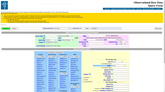
The dataset contains observational raw data from various instruments at ESO facilities (La Silla, Paranal, and VLT). It includes imaging, spectroscopy, interferometry, polarimetry, and coronagraphy data, with various instruments like EFOSC2, EMMI, ERIS, FORS1, FORS2, ISAAC, NACO, SPHERE, and more. The data covers science, calibration, acquisition, technical, test, simulation, and other categories. Users can query the data based on various parameters, including target name, program ID, observing dates, instrument setup, and exposure time.
archive.eso.org
IP: 134.171.46.246
加载中...
相关论文
6r-Process elements from magnetorotational hypernovae
D. Yong•C. Kobayashi•G. S. Da Costa•M. S. Bessell•A. Chiti等 14 人
Nature
2021
•2021/7/7
•Vol.595 No.7866 p.223-226
Neutron-star mergers were recently confirmed as sites of rapid-neutron-capture (r-process) nucleosynthesis1–3. However, in Galactic chemical evolution models, neutron-star mergers alone cannot reproduce the observed element abundance patterns of extremely metal-poor stars, which indicates the existe...
Early universeStarsStellar evolution
10.1038/S41586-021-03611-2
ISSN:0028-0836
Milky-Way-like stars in a galaxy core 8 billion years ago revealed by gravitational lensing
Quirino D’Amato•Filippo Mannucci•Alessandro Sonnenfeld•Martina Scialpi•James W. Nightingale等 43 人
Nature Astronomy
2026
•2026/4/2
•00 p.1-12
The assembly of stellar-dominated cores in elliptical galaxies is key to understanding how cosmic structures evolved. Gravitational lensing offers unique insights into the nature of their stars. Here we report the discovery of an extremely compact quadruply lensed quasar (radius ~0.2″), whose lensin...
Compact astrophysical objectsDark energy and dark matterGalaxies and clustersStellar evolution
10.1038/S41550-026-02819-4
ISSN:2397-3366
Spectral determination of the colour and vertical structure of dark spots in Neptune’s atmosphere
Patrick G. J. Irwin•Jack Dobinson•Arjuna James•Michael H. Wong•Leigh N. Fletcher等 16 人
Nature Astronomy
2023
•2023/8/24
•00 p.1-10
Previous observations of dark vortices in Neptune’s atmosphere, such as Voyager 2’s Great Dark Spot (1989), have been made in only a few broad-wavelength channels, hampering efforts to determine these vortices’ pressure levels and darkening processes. We analyse spectroscopic observations of a dark ...
Atmospheric chemistryGiant planets
10.1038/S41550-023-02047-0
ISSN:2397-3366
Gravitational instability in a planet-forming disk
Jessica Speedie•Ruobing Dong•Cassandra Hall•Cristiano Longarini•Benedetta Veronesi等 10 人
Nature
2024
•2024/9/4
•Vol.633 No.8028 p.58-62
The canonical theory for planet formation in circumstellar disks proposes that planets are grown from initially much smaller seeds1–5. The long-considered alternative theory proposes that giant protoplanets can be formed directly from collapsing fragments of vast spiral arms6–11 induced by gravitati...
Astrophysical disksExoplanets
10.1038/S41586-024-07877-0
ISSN:0028-0836
A binary system in the S cluster close to the supermassive black hole Sagittarius A*
Florian Peißker•Michal Zajaček•Lucas Labadie•Emma Bordier•Andreas Eckart等 7 人
Nature Communications
2024
•2024/12/17
•Vol.15 No.1 p.1-11
High-velocity stars and peculiar G objects orbit the central supermassive black hole (SMBH) Sagittarius A* (Sgr A*). Together, the G objects and high-velocity stars constitute the S cluster. In contrast with theoretical predictions, no binary system near Sgr A* has been identified. Here, we report t...
Stellar evolutionTransient astrophysical phenomena
10.1038/S41467-024-54748-3
ISSN:2041-1723
Magnetic field strengths of hot giant exoplanets consistent with Solar System values
Julia V. Seidel•Vivien Parmentier•Bibiana Prinoth•Thea Hood•Nishil Mehta等 32 人
Nature Astronomy
2026
•2026/6/2
•00 p.1-12
Magnetic fields are a key factor in the evolution of planets and their atmospheres, but they are still poorly constrained for exoplanets owing to limited direct observations. Ultra-hot Jupiters provide a new avenue to probe magnetic effects, as the circulation of their highly ionized atmospheres cou...
Atmospheric dynamicsExoplanets
10.1038/S41550-026-02870-1
ISSN:2397-3366