Polygenic Scores Catalog
English
PGS

数据描述

Polygenic Scores Catalog

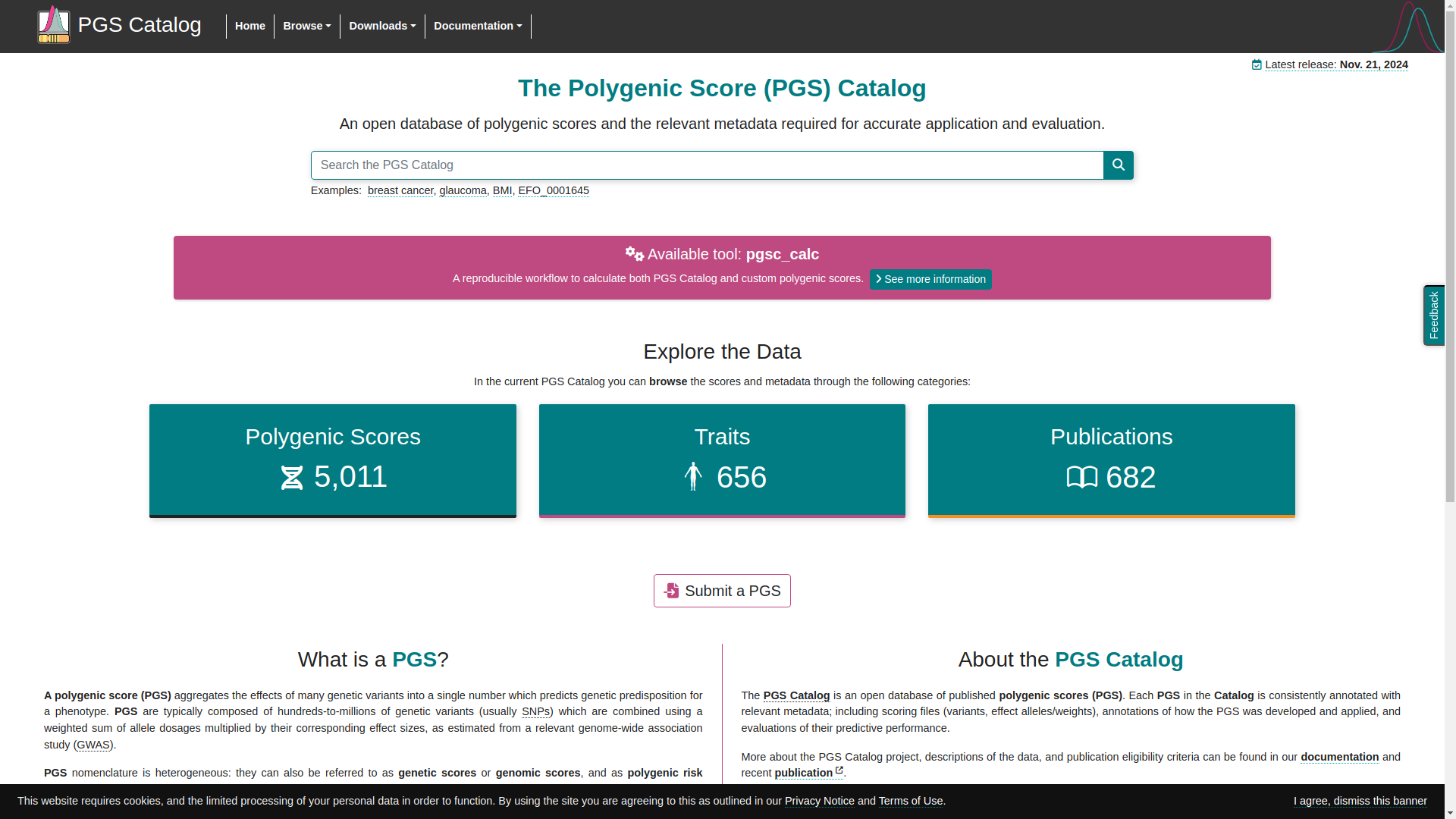
The Polygenic Score (PGS) Catalog is an open database maintained by EMBL-EBI that provides a repository for polygenic scores (PGS), including metadata necessary for their application and evaluation. It contains 5,011 PGS entries associated with 656 traits, such as breast cancer and BMI, supported by relevant publications and tools like pgsc_calc for score calculation. The Catalog offers comprehensive details on the derivation of each PGS, the genetic variants involved, allele dosages, effect sizes from genome-wide association studies (GWAS), and performance metrics. Users can access metadata and scoring files through bulk downloads, command-line utilities, or a REST API. The dataset aims to facilitate research by standardizing PGS annotation and supporting the development and application of polygenic risk scores for predicting genetic predisposition to traits or diseases.

www.pgscatalog.org
IP: 142.250.196.211
访问数据源
加载中...

相关论文

48

Consensus meta-analysis of genome-wide association studies for Alzheimer’s disease and related dementias

Nature Genetics
2026
2026/6/3
00 p.1-12
To better characterize the genetic architecture underlying Alzheimer’s disease (AD) and related dementias (ADRD), we performed a meta-analysis of European-ancestry genome-wide association studies in 128,681 cases or proxy cases of ADRD and 849,833 (proxy) controls. We identified 91 genetic loci asso...
Alzheimer's diseaseGenome-wide association studies
10.1038/S41588-026-02583-1
ISSN:1061-4036

Genomic and transcriptomic analyses of aortic stenosis enhance therapeutic target discovery and disease prediction

Aeron M. SmallTa-Yu YangShinsuke ItohSébastien ThériaultLine Dufresne101
Nature Genetics
2025
2025/12/19
00 p.1-10
Aortic stenosis (AS) is a common valvular heart disease and has no pharmacological therapies. We performed a multi-ancestry genome-wide association meta-analysis of 86,864 AS cases among 2,853,408 individuals, discovering 241 autosomal independent risk loci and 3 X chromosome risk loci. We additiona...
Gene expressionGenome-wide association studies
10.1038/S41588-025-02417-6
ISSN:1061-4036

Multivariate genomic analysis of 5 million people elucidates the genetic architecture of shared components of the metabolic syndrome

Sanghyeon ParkSoyeon KimBeomsu KimDan Say KimJaeyoung Kim22
Nature Genetics
2024
2024/9/30
00 p.1-12
Metabolic syndrome (MetS) is a complex hereditary condition comprising various metabolic traits as risk factors. Although the genetics of individual MetS components have been investigated actively through large-scale genome-wide association studies, the conjoint genetic architecture has not been ful...
Genome-wide association studiesMetabolic disordersPopulation genetics
10.1038/S41588-024-01933-1
ISSN:1061-4036

Genetic effects on the timing of parturition and links to fetal birth weight

Solé-Navais PolFlatley ChristopherSteinthorsdottir ValgerdurVaudel MarcJuodakis Julius85
Nature Genetics
2023
2023/4/3
00 p.1-9
The timing of parturition is crucial for neonatal survival and infant health. Yet, its genetic basis remains largely unresolved. We present a maternal genome-wide meta-analysis of gestational duration (n = 195,555), identifying 22 associated loci (24 independent variants) and an enrichment in genes ...
Genetics researchGenome-wide association studies
10.1038/S41588-023-01343-9
ISSN:1061-4036

Integration of pathologic characteristics, genetic risk and lifestyle exposure for colorectal cancer survival assessment

Junyi XinDongying GuShuwei LiSangni QianYifei Cheng16
Nature Communications
2024
2024/4/8
Vol.15 No.1 p.1-11
The development of an effective survival prediction tool is key for reducing colorectal cancer mortality. Here, we apply a three-stage study to devise a polygenic prognostic score (PPS) for stratifying colorectal cancer overall survival. Leveraging two cohorts of 3703 patients, we first perform a ge...
Cancer epidemiologyGenetic association studyPrognostic markers
10.1038/S41467-024-47204-9
ISSN:2041-1723

Cross-ancestry genome-wide association meta-analyses of hippocampal and subfield volumes

Nana LiuLongjiang ZhangTian TianJingliang ChengBing Zhang44
Nature Genetics
2023
2023/6/19
00 p.1-12
The hippocampus is critical for memory and cognition and neuropsychiatric disorders, and its subfields differ in architecture and function. Genome-wide association studies on hippocampal and subfield volumes are mainly conducted in European populations; however, other ancestral populations are under...
Genome-wide association studiesNeurogenesis
10.1038/S41588-023-01425-8
ISSN:1061-4036

Integration of polygenic and gut metagenomic risk prediction for common diseases

Yang LiuScott C. RitchieShu Mei TeoMatti O. RuuskanenOleg Kambur17
Nature Aging
2024
2024/3/25
00 p.1-11
Multiomics has shown promise in noninvasive risk profiling and early detection of various common diseases. In the present study, in a prospective population-based cohort with ~18 years of e-health record follow-up, we investigated the incremental and combined value of genomic and gut metagenomic ris...
DiseasesPredictive markers
10.1038/S43587-024-00590-7
ISSN:2662-8465

A linear weighted combination of polygenic scores for a broad range of traits improves prediction of coronary heart disease

Kristjan NorlandDaniel J. SchaidIftikhar J. Kullo
European Journal Of Human Genetics
2023
2023/9/26
00 p.1-6
Polygenic scores (PGS) for coronary heart disease (CHD) are constructed using GWAS summary statistics for CHD. However, pleiotropy is pervasive in biology and disease-associated variants often share etiologic pathways with multiple traits. Therefore, incorporating GWAS summary statistics of addition...
Genetic markersPredictive markers
10.1038/S41431-023-01463-0
ISSN:1018-4813

Multitrait analyses identify genetic variants associated with aortic valve function and aortic stenosis risk

Shinwan KanyJoel T. RämöCody HouSean J. JurgensShaan Khurshid16
Nature Genetics
2025
2025/12/19
00 p.1-10
The genetic influences on normal aortic valve function and their impact on aortic stenosis risk are of substantial interest. We used deep learning to measure peak velocity, mean gradient and aortic valve area from magnetic resonance imaging and conducted genome-wide association studies (GWAS) in 59,...
EpidemiologyGenetics researchValvular disease
10.1038/S41588-025-02397-7
ISSN:1061-4036

Biological aging and generational shifts in early-onset cancer risk

Ruiyi TianXiaoyu ZongDuo RenStefani TicaDaniel Hong9
Nature Medicine
2026
2026/6/22
00 p.1-8
Incidence of early-onset cancer is rising globally in recent generations, which underscores the need to elucidate the influence of emerging generational risk factors. Systemic and organ-specific aging reflects the cumulative impact of exposures and may provide an integrative and complementary approa...
Cancer epidemiologyRisk factors
10.1038/S41591-026-04448-W
ISSN:1078-8956

Integration of variant annotations using deep set networks boosts rare variant association testing

Brian ClarkeEva HoltkampHakime ÖztürkMarcel MückMagnus Wahlberg13
Nature Genetics
2024
2024/9/25
00 p.1-10
Rare genetic variants can have strong effects on phenotypes, yet accounting for rare variants in genetic analyses is statistically challenging due to the limited number of allele carriers and the burden of multiple testing. While rich variant annotations promise to enable well-powered rare variant a...
Population geneticsSequence annotation
10.1038/S41588-024-01919-Z
ISSN:1061-4036

Global multi-ancestry genome-wide analyses identify genes and biological pathways associated with thyroid cancer and benign thyroid diseases

Samantha L. WhiteMaizy S. BrasherJack PatteeWei ZhouSinéad Chapman85
Nature Genetics
2026
2026/2/5
Vol.58 No.2 p.307-316
Thyroid diseases are common and highly heritable. We performed a meta-analysis of genome-wide association studies from 19 biobanks for five thyroid diseases: thyroid cancer (ThC), benign nodular goiter, Graves’ disease, lymphocytic thyroiditis and primary hypothyroidism. We analyzed genetic associat...
Genome-wide association studiesThyroid cancer
10.1038/S41588-025-02483-W
ISSN:1061-4036

Polygenic prediction of body mass index and obesity through the life course and across ancestries

Roelof A. J. SmitKaitlin H. WadeQin HuiJoshua D. AriasXianyong Yin627
Nature Medicine
2025
2025/7/21
00 p.1-18
Polygenic scores (PGSs) for body mass index (BMI) may guide early prevention and targeted treatment of obesity. Using genetic data from up to 5.1 million people (4.6% African ancestry, 14.4% American ancestry, 8.4% East Asian ancestry, 71.1% European ancestry and 1.5% South Asian ancestry) from the ...
ObesityPredictive markers
10.1038/S41591-025-03827-Z
ISSN:1078-8956

Advancing our understanding of genetic risk factors and potential personalized strategies for pelvic organ prolapse

Pujol-Gualdo NatàliaLäll KristiLepamets MaarjaRossi Henna-RiikkaArffman Riikka K.8
Nature Communications
2022
2022/6/23
Vol.13 No.1 p.1-12
Pelvic organ prolapse is a common gynecological condition with limited understanding of its genetic background. In this work, we perform a genome-wide association meta-analysis comprising 28,086 cases and 546,291 controls from European ancestry. We identify 19 novel genome-wide significant loci, hig...
Genetic association studyUrogenital diseases
10.1038/S41467-022-31188-5
ISSN:2041-1723

Evaluation of polygenic scores for hypertrophic cardiomyopathy in the general population and across clinical settings

Sean L. ZhengSean J. JurgensKathryn A. McGurkXiao XuChris Grace38
Nature Genetics
2025
2025/2/18
Vol.57 No.3 p.563-571
Hypertrophic cardiomyopathy (HCM) is an important cause of morbidity and mortality, with pathogenic variants found in about a third of cases. Large-scale genome-wide association studies (GWAS) demonstrate that common genetic variation contributes to HCM risk. Here we derive polygenic scores (PGS) fr...
CardiomyopathiesPersonalized medicinePopulation genetics
10.1038/S41588-025-02094-5
ISSN:1061-4036

Predictive capabilities of polygenic scores in an East-Asian population-based cohort: the Singapore Chinese health study

Xuling ChangChih Chuan ShihJieqi ChenAi Shan LeePatrick Tan12
Communications Biology
2025
2025/8/15
Vol.8 No.1 p.1-9
Polygenic scores (PGS) are derived primarily from European population studies. It is unclear how these perform in risk predictions among East-Asians. We generated 2173 PGSs from 519 traits and assessed their associations with 58 baseline phenotypes in the Singapore Chinese Health Study, a prospectiv...
Genome-wide association studiesPredictive markers
10.1038/S42003-025-08675-8
ISSN:2399-3642

Genome-wide association study of prostate-specific antigen levels in 392,522 men identifies new loci and improves prediction across ancestry groups

Thomas J. HoffmannRebecca E. GraffRavi K. MadduriAlex A. RodriguezClinton L. Cario49
Nature Genetics
2025
2025/2/10
Vol.57 No.2 p.334-344
We conducted a multiancestry genome-wide association study of prostate-specific antigen (PSA) levels in 296,754 men (211,342 European ancestry, 58,236 African ancestry, 23,546 Hispanic/Latino and 3,630 Asian ancestry; 96.5% of participants were from the Million Veteran Program). We identified 318 in...
CancerGenome-wide association studies
10.1038/S41588-024-02068-Z
ISSN:1061-4036

Characterizing prostate cancer risk through multi-ancestry genome-wide discovery of 187 novel risk variants

Anqi WangJiayi ShenAlex A. RodriguezEdward J. SaundersFei Chen291
Nature Genetics
2023
2023/11/9
00 p.1-10
The transferability and clinical value of genetic risk scores (GRSs) across populations remain limited due to an imbalance in genetic studies across ancestrally diverse populations. Here we conducted a multi-ancestry genome-wide association study of 156,319 prostate cancer cases and 788,443 controls...
Genetics researchGenome-wide association studiesPreventive medicineProstate cancer
10.1038/S41588-023-01534-4
ISSN:1061-4036

Body mass index stratification optimizes polygenic prediction of type 2 diabetes in cross-biobank analyses

Takafumi OjimaShinichi NambaKen SuzukiKenichi YamamotoKyuto Sonehara12
Nature Genetics
2024
2024/6/11
Vol.56 No.6 p.1100-1109
Type 2 diabetes (T2D) shows heterogeneous body mass index (BMI) sensitivity. Here, we performed stratification based on BMI to optimize predictions for BMI-related diseases. We obtained BMI-stratified datasets using data from more than 195,000 individuals (nT2D = 55,284) from BioBank Japan (BBJ) and...
Cardiovascular diseasesGenome-wide association studiesMetabolic disordersTranslational research
10.1038/S41588-024-01782-Y
ISSN:1061-4036

A new method for multiancestry polygenic prediction improves performance across diverse populations

Haoyu ZhangJianan ZhanJin JinJingning ZhangWenxuan Lu16
Nature Genetics
2023
2023/9/25
00 p.1-12
Polygenic risk scores (PRSs) increasingly predict complex traits; however, suboptimal performance in non-European populations raise concerns about clinical applications and health inequities. We developed CT-SLEB, a powerful and scalable method to calculate PRSs, using ancestry-specific genome-wide ...
Genome-wide association studiesPreventive medicine
10.1038/S41588-023-01501-Z
ISSN:1061-4036

Genome-wide analyses of variance in blood cell phenotypes provide new insights into complex trait biology and prediction

Ruidong XiangChief Ben-EghanYang LiuDavid RobertsScott Ritchie9
Nature Communications
2025
2025/5/7
Vol.16 No.1 p.1-12
Blood cell phenotypes are routinely tested in healthcare to inform clinical decisions. Genetic variants influencing mean blood cell phenotypes have been used to understand disease aetiology and improve prediction; however, additional information may be captured by genetic effects on observed varianc...
EpidemiologyGenome-wide association studiesMedical genetics
10.1038/S41467-025-59525-4
ISSN:2041-1723

Integrating the environmental and genetic architectures of aging and mortality

M. Austin ArgentieriNajaf AminAlejo J. Nevado-HolgadoWilliam SprovieroJennifer A. Collister13
Nature Medicine
2025
2025/2/19
Vol.31 No.3 p.1016-1025
Both environmental exposures and genetics are known to play important roles in shaping human aging. Here we aimed to quantify the relative contributions of environment (referred to as the exposome) and genetics to aging and premature mortality. To systematically identify environmental exposures asso...
DiagnosisEpidemiologyMetabolic disordersPredictive markersRisk factors
10.1038/S41591-024-03483-9
ISSN:1078-8956

Low depression frequency is associated with decreased risk of cardiometabolic disease

Honigberg Michael C.Ye YixuanDattilo LillianSarma Amy A.Scott Nandita S.9
Nature Cardiovascular Research
2022
2022/2/14
00 p.1-7
Polygenic risk scores (PRS) are an increasingly available tool to refine risk prediction for cardiometabolic diseases1. Favorable lifestyle behaviors might offset increased polygenic risk, but whether frequency of depressed mood stratifies PRS-associated risk is unknown. Here, we calculated individu...
CardiologyCardiovascular diseasesPopulation geneticsType 2 diabetes
10.1038/S44161-021-00011-7
ISSN:2731-0590

A Bayesian framework for longitudinal EHR and genetic discovery

Sarah M. UrbutYi DingTetsushi NakaoSatoshi KoyamaAnika Misra13
Nature
2026
2026/7/15
00 p.1-12
Electronic health records (EHRs) provide rich longitudinal disease histories, but existing methods for analysing these data typically treat diseases in isolation1 and rarely integrate germline genetics. Here we present ALADYNOULLI, a Bayesian generative framework that jointly models longitudina...
Genetic markersGenome-wide association studiesPredictive medicineRisk factorsStatistics
10.1038/S41586-026-10780-5
ISSN:0028-0836

Cross-ancestry genome-wide analysis of atrial fibrillation unveils disease biology and enables cardioembolic risk prediction

Miyazawa KazuoIto KaoruIto MasamichiZou ZhaonanKubota Masayuki26
Nature Genetics
2023
2023/1/19
Vol.55 No.2 p.187-197
Atrial fibrillation (AF) is a common cardiac arrhythmia resulting in increased risk of stroke. Despite highly heritable etiology, our understanding of the genetic architecture of AF remains incomplete. Here we performed a genome-wide association study in the Japanese population comprising 9,826 case...
Atrial fibrillationGenome-wide association studiesPopulation genetics
10.1038/S41588-022-01284-9
ISSN:1061-4036

Clinical utility of polygenic scores for cardiometabolic disease in Arabs

Injeong ShimHiroyuki KuwaharaNingNing ChenMais O. HashemLama AlAbdi13
Nature Communications
2023
2023/10/18
Vol.14 No.1 p.1-11
Arabs account for 5% of the world population and have a high burden of cardiometabolic disease, yet clinical utility of polygenic risk prediction in Arabs remains understudied. Among 5399 Arab patients, we optimize polygenic scores for 10 cardiometabolic traits, achieving a performance that is bette...
Genetic variationPersonalized medicinePredictive markersRisk factors
10.1038/S41467-023-41985-1
ISSN:2041-1723

Genome-wide analysis of heart failure yields insights into disease heterogeneity and enables prognostic prediction in the Japanese population

Nobuyuki EnzanKazuo MiyazawaSatoshi KoyamaRyo KurosawaHirotaka Ieki30
Nature Communications
2025
2025/11/3
Vol.16 No.1 p.1-16
To understand the genetic basis of heart failure (HF) in the Japanese population, we performed genome-wide association studies (GWASs) comprising 16,251 all-cause HF cases, 4254 HF with reduced ejection fraction (HFrEF) cases, 7154 HF with preserved ejection fraction cases, and 11,122 non-ischemic H...
Cardiovascular geneticsGenetic variationHeart failure
10.1038/S41467-025-64659-6
ISSN:2041-1723

Cross-biobank generalizability and accuracy of electronic health record-based predictors compared to polygenic scores

Kira E. DetroisTuomo HartonenMaris Teder-LavingBradley JermyKristi Läll9
Nature Genetics
2025
2025/8/27
00 p.1-10
Electronic health record (EHR)-based phenotype risk scores (PheRS) leverage individuals’ health trajectories to estimate disease risk, similar to how polygenic scores (PGS) use genetic information. While PGS generalizability has been studied, less is known about PheRS generalizability across healthc...
Genetics researchPreventive medicine
10.1038/S41588-025-02298-9
ISSN:1061-4036

Performance of deep-learning-based approaches to improve polygenic scores

Martin KelemenYu XuTao JiangJing Hua ZhaoCarl A. Anderson8
Nature Communications
2025
2025/6/2
Vol.16 No.1 p.1-9
Polygenic scores, which estimate an individual’s genetic propensity for a disease or trait, have the potential to become part of genomic healthcare. Neural-network based deep-learning has emerged as a method of intense interest to model complex, nonlinear phenomena, which may be adapted to exploit g...
EpistasisPersonalized medicineRisk factors
10.1038/S41467-025-60056-1
ISSN:2041-1723

Combining Asian and European genome-wide association studies of colorectal cancer improves risk prediction across racial and ethnic populations

Minta ThomasYu-Ru SuElisabeth A. RosenthalLori C. SakodaStephanie L. Schmit129
Nature Communications
2023
2023/10/2
Vol.14 No.1 p.1-13
Polygenic risk scores (PRS) have great potential to guide precision colorectal cancer (CRC) prevention by identifying those at higher risk to undertake targeted screening. However, current PRS using European ancestry data have sub-optimal performance in non-European ancestry populations, limiting th...
Cancer geneticsCancer screeningGenome-wide association studiesPredictive markers
10.1038/S41467-023-41819-0
ISSN:2041-1723

Improved polygenic risk prediction models for breast cancer subtypes in women of African ancestry

James L. LiHaoyu ZhangXiaoyu WangGuochong JiaJulian C. McClellan55
Nature Genetics
2026
2026/2/2
Vol.58 No.3 p.560-569
Polygenic risk score (PRS) models effectively predict breast cancer (BC) risk in European-ancestry women but have limited accuracy for African-ancestry women, particularly for aggressive subtypes. We developed PRS models for overall BC, estrogen receptor (ER)-positive, ER-negative and triple-negativ...
Breast cancerPersonalized medicine
10.1038/S41588-026-02501-5
ISSN:1061-4036

Complex trait associations in rare diseases and impacts on Mendelian variant interpretation

Craig SmailBing GeMarissa R. Keever-KeigherCarl Schwendinger-SchreckWarren A. Cheung13
Nature Communications
2024
2024/9/18
Vol.15 No.1 p.1-11
Emerging evidence implicates common genetic variation - aggregated into polygenic scores (PGS) - in the onset and phenotypic presentation of rare diseases. Here, we comprehensively map individual polygenic liability for 1102 open-source PGS in a cohort of 3059 probands enrolled in the Genomic Answer...
GeneticsMedical genetics
10.1038/S41467-024-52407-1
ISSN:2041-1723

Performance of different polygenic risk scores for breast cancer risk prediction: in-depth evaluations across large UK and Australian cohorts

Hamzeh M. TanhaMatthew H. LawNathan IngoldCatherine M. OlsenNirmala Pandeya10
European Journal Of Human Genetics
2026
2026/1/13
Vol.34 No.2 p.278-287
Polygenic risk scores (PGS) have the potential to support enhanced, risk-based screening for breast cancer. Previous studies for many diseases found that genome-wide PGS (GW-PGS) outperform PGS derived by applying hard GWAS significance thresholds. To support future breast cancer risk predictions, w...
Breast cancerEpidemiologyGenetics research
10.1038/S41431-025-02003-8
ISSN:1018-4813

Non-coding genetic variants underlying higher prostate cancer risk in men of African ancestry

Shan LiKaniz FatemaNidharshan SundarrajArashdeep SinghPadma Sheila Rajagopal8
Nature Communications
2025
2025/11/20
Vol.16 No.1 p.102020
Prostate cancer (PrCa) incidence and severity vary across ancestries; men of African ancestry (AA) are more likely to be diagnosed and die from PrCa than those of European ancestry (EA). Current polygenic risk scores, even from multi-ancestry GWAS, do not fully capture population-specific genetic me...
Cancer geneticsGene regulationMachine learningProstate cancer
10.1038/S41467-025-64631-4
ISSN:2041-1723

Integrative analysis of the plasma proteome and polygenic risk of cardiometabolic diseases

Ritchie Scott C.Lambert Samuel A.Arnold MatthewTeo Shu MeiLim Sol25
Nature Metabolism
2021
2021/11/8
Vol.3 No.11 p.1476-1483
Cardiometabolic diseases are frequently polygenic in architecture, comprising a large number of risk alleles with small effects spread across the genome1–3. Polygenic scores (PGS) aggregate these into a metric representing an individual’s genetic predisposition to disease. PGS have shown promise for...
Functional genomicsMetabolismPopulation geneticsType 2 diabetesVascular diseases
10.1038/S42255-021-00478-5
ISSN:2522-5812

Integrative common and rare variant analyses provide insights into the genetic architecture of liver cirrhosis

Jonas GhouseGardar SveinbjörnssonMarijana VujkovicAnne-Sofie SeidelinHelene Gellert-Kristensen51
Nature Genetics
2024
2024/4/17
00 p.1-11
We report a multi-ancestry genome-wide association study on liver cirrhosis and its associated endophenotypes, alanine aminotransferase (ALT) and γ-glutamyl transferase. Using data from 12 cohorts, including 18,265 cases with cirrhosis, 1,782,047 controls, up to 1 million individuals with liver func...
Genome-wide association studiesLiver cirrhosis
10.1038/S41588-024-01720-Y
ISSN:1061-4036

The power of genetic diversity in genome-wide association studies of lipids

Graham Sarah E.Clarke Shoa L.Wu Kuan-Han H.Kanoni StavroulaZajac Greg J. M.524
Nature
2021
2021/12/9
00 p.1-11
Increased blood lipid levels are heritable risk factors of cardiovascular disease with varied prevalence worldwide owing to different dietary patterns and medication use1. Despite advances in prevention and treatment, in particular through reducing low-density lipoprotein cholesterol levels2, heart ...
Computational modelsGenome-wide association studiesPreventive medicineRisk factors
10.1038/S41586-021-04064-3
ISSN:0028-0836

Genome-wide analysis in over 1 million individuals of European ancestry yields improved polygenic risk scores for blood pressure traits

Jacob M. KeatonZoha KamaliTian XieAhmad VaezAriel Williams147
Nature Genetics
2024
2024/4/30
00 p.1-14
Hypertension affects more than one billion people worldwide. Here we identify 113 novel loci, reporting a total of 2,103 independent genetic signals (P < 5 × 10⁻⁸) from the largest single-stage blood pressure (BP) genome-wide association study to date (n = 1,028,980 European individuals). These a...
HypertensionMetagenomics
10.1038/S41588-024-01714-W
ISSN:1061-4036

Genome-wide association analyses identify distinct genetic architectures for age-related macular degeneration across ancestries

Bryan R. GormanGeorgios VoloudakisRobert P. IgoTyler KinzyChristopher W. Halladay38
Nature Genetics
2024
2024/12/2
00 p.1-13
To effectively reduce vision loss due to age-related macular generation (AMD) on a global scale, knowledge of its genetic architecture in diverse populations is necessary. A critical element, AMD risk profiles in African and Hispanic/Latino ancestries, remains largely unknown. We combined data in th...
GeneticsPopulation genetics
10.1038/S41588-024-01764-0
ISSN:1061-4036

Association of genetic scores related to insulin resistance with neurological outcomes in ancestrally diverse cohorts from the Trans-Omics for Precision Medicine (TOPMed) program

Chloé SarnowskiYixin ZhangFarah AmmousLincoln M. P. ShadeDaniel DiCorpo70
Communications Biology
2025
2025/9/24
Vol.8 No.1 p.1-11
To better characterize the potential biological mechanisms underlying insulin resistance (IR) and dementia, we derive cross-population and population specific polygenic scores [PSs] for fasting insulin and IR-related partitioned PSs [pPSs]. We conduct a cross-sectional study of the associations of t...
Genetic association studyGenetic variationGenomics
10.1038/S42003-025-08674-9
ISSN:2399-3642

Genome-wide association analysis provides insights into the molecular etiology of dilated cardiomyopathy

Sean L. ZhengAlbert HenryDouglas CannieMichael LeeDavid Miller106
Nature Genetics
2024
2024/11/21
00 p.1-13
Dilated cardiomyopathy (DCM) is a leading cause of heart failure and cardiac transplantation. We report a genome-wide association study and multi-trait analysis of DCM (14,256 cases) and three left ventricular traits (36,203 UK Biobank participants). We identified 80 genomic risk loci and prioritize...
CardiomyopathiesGenome-wide association studies
10.1038/S41588-024-01952-Y
ISSN:1061-4036

Genome-wide meta-analyses of cross substance use disorders in diverse populations

Dongbing LaiMichael ZhangNick GreenMarco AbreuTae-Hwi Schwantes-An13
Molecular Psychiatry
2025
2025/10/7
00 p.1-15
Substance use disorders (SUDs, including alcohol, cannabis, opioids, and tobacco) represent significant public health challenges. The estimated heritability of SUDs is ~50% and many individuals experience multiple SUDs concurrently. Studies have demonstrated the existence of genes shared across mult...
AddictionGenetics
10.1038/S41380-025-03294-5
ISSN:1359-4184

An ensemble penalized regression method for multi-ancestry polygenic risk prediction

Jingning ZhangJianan ZhanJin JinCheng MaRuzhang Zhao10
Nature Communications
2024
2024/4/15
Vol.15 No.1 p.1-14
Great efforts are being made to develop advanced polygenic risk scores (PRS) to improve the prediction of complex traits and diseases. However, most existing PRS are primarily trained on European ancestry populations, limiting their transferability to non-European populations. In this article, we pr...
Genetic association studyGenetic predisposition to disease
10.1038/S41467-024-47357-7
ISSN:2041-1723

MIXPRS enables multi-population and multi-method polygenic risk scores using summary statistics

Leqi XuYikai DongXiaowei ZengZeyu BianGeyu Zhou7
Nature Genetics
2026
2026/6/9
00 p.1-12
Many multi-population polygenic risk score (PRS) methods have been proposed to improve prediction in underrepresented populations; however, no single method performs best across all scenarios. Although integrating PRSs across multiple methods and populations may improve prediction, this approach is ...
GeneticsPopulation genetics
10.1038/S41588-026-02637-4
ISSN:1061-4036

Uncovering the multivariate genetic architecture of frailty with genomic structural equation modeling

Isabelle F. FooteJonny P. FlintAnna E. FürtjesJeremy M. LawrenceDonncha S. Mullin16
Nature Genetics
2025
2025/8/4
00 p.1-12
Frailty is a multifaceted clinical state associated with accelerated aging and adverse health outcomes. Informed etiological models of frailty hold promise for producing widespread health improvements across the aging population. Frailty is currently measured using aggregate scores, which obscure et...
EpidemiologyGenetics researchGenome-wide association studiesOutcomes researchPopulation genetics
10.1038/S41588-025-02269-0
ISSN:1061-4036

Prostate cancer genetic risk and associated aggressive disease in men of African ancestry

Pamela X. Y. SohNaledi MmekwaDesiree C. PetersenKazzem GheybiSmit van Zyl12
Nature Communications
2023
2023/12/5
Vol.14 No.1 p.1-14
African ancestry is a significant risk factor for prostate cancer and advanced disease. Yet, genetic studies have largely been conducted outside the context of Sub-Saharan Africa, identifying 278 common risk variants contributing to a multiethnic polygenic risk score, with rare variants focused on a...
Cancer geneticsGenetics researchProstateProstate cancer
10.1038/S41467-023-43726-W
ISSN:2041-1723

Applying a genetic risk score model to enhance prediction of future multiple sclerosis diagnosis at first presentation with optic neuritis

Pavel LoginovicFeiyi WangJiang LiLauric FerratUyenlinh L. Mirshahi15
Nature Communications
2024
2024/2/28
Vol.15 No.1 p.1-13
Optic neuritis (ON) is associated with numerous immune-mediated inflammatory diseases, but 50% patients are ultimately diagnosed with multiple sclerosis (MS). Differentiating MS-ON from non-MS-ON acutely is challenging but important; non-MS ON often requires urgent immunosuppression to preserve visi...
Genetics researchMultiple sclerosisOptic nerve diseasesTranslational research
10.1038/S41467-024-44917-9
ISSN:2041-1723

Identification of plasma proteomic markers underlying polygenic risk of type 2 diabetes and related comorbidities

Douglas P. LoeschManik GargDorota MatelskaDimitrios VitsiosXiao Jiang21
Nature Communications
2025
2025/3/3
Vol.16 No.1 p.1-16
Genomics can provide insight into the etiology of type 2 diabetes and its comorbidities, but assigning functionality to non-coding variants remains challenging. Polygenic scores, which aggregate variant effects, can uncover mechanisms when paired with molecular data. Here, we test polygenic scores f...
Personalized medicineType 2 diabetes
10.1038/S41467-025-56695-Z
ISSN:2041-1723