Human DLPFC spatial transcriptomics data from the 10x Genomics Visium platform
English
Genomics

数据描述

Human DLPFC spatial transcriptomics data from the 10x Genomics Visium platform

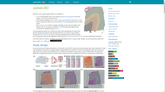
The spatialLIBD dataset version 1.19.3 provides spatial transcriptomics data from the human dorsolateral prefrontal cortex (DLPFC) analyzed using the 10x Genomics Visium platform. The dataset includes expression data from six neuronal layers and white matter across three subjects, with two replicates per subject. It enables visualization of gene expression at both spot-level and layer-level resolution, allowing researchers to explore known genes like SNAP25 (neuronal), MOBP (oligodendrocyte), and layer-specific markers such as PCP4. The data can be accessed through the spatialLIBD R/Bioconductor package or the web application at spatial.libd.org/spatialLIBD/, which also supports custom gene set uploads for comparative analysis. This resource facilitates understanding of spatially resolved transcriptomics in the human brain, with processed and raw data available for further exploration.

research.libd.org
IP: 185.199.110.153
访问数据源
加载中...

相关论文

9

Pianno: a probabilistic framework automating semantic annotation for spatial transcriptomics

Yuqiu ZhouWei HeWeizhen HouYing Zhu
Nature Communications
2024
2024/4/2
Vol.15 No.1 p.1-15
Spatial transcriptomics has revolutionized the study of gene expression within tissues, while preserving spatial context. However, annotating spatial spots’ biological identity remains a challenge. To tackle this, we introduce Pianno, a Bayesian framework automating structural semantics annotation b...
Computational modelsData processingRNA sequencingSoftwareStatistical methods
10.1038/S41467-024-47152-4
ISSN:2041-1723

Interpretable, flexible and spatially aware integration of multiple spatial transcriptomics datasets from diverse sources

Jia ZhaoXiangyu ZhangGefei WangYingxin LinTianyu Liu7
Nature Genetics
2026
2026/4/27
00 p.1-13
Recent advances in spatial transcriptomics (ST) have generated an expanding collection of heterogeneous datasets, offering unprecedented opportunities to investigate tissue organizations and functions. However, effective interpretation and integration of data originating from diverse sources and con...
Data miningSoftwareTranscriptomics
10.1038/S41588-026-02579-X
ISSN:1061-4036

Integrative cross-omics and cross-context analysis elucidates molecular links underlying genetic effects on complex traits

Yihao LuMeritxell OlivaBrandon L. PierceJin LiuLin S. Chen
Nature Communications
2024
2024/3/16
Vol.15 No.1 p.1-13
Genetic effects on functionally related ‘omic’ traits often co-occur in relevant cellular contexts, such as tissues. Motivated by the multi-tissue methylation quantitative trait loci (mQTLs) and expression QTLs (eQTLs) analysis, we propose X-ING (Cross-INtegrative Genomics) for cross-omics and cross...
DNA methylationEpigenetics
10.1038/S41467-024-46675-0
ISSN:2041-1723

Hypergraph-driven spatial multimodal fusion for precise domain delineation and tumor microenvironment decoding

Chengyang ZhangXulong LiBo LiChenxun DengMengran Li11
Communications Biology
2025
2025/12/1
0
Recent advancements in spatial transcriptomics have transformed tumor microenvironment research by providing insights into cellular interactions and spatial heterogeneity. A fundamental challenge is the precise delineation of spatial domains. However, existing methods remain limited in accurately id...
Computational modelsMachine learning
10.1038/S42003-025-09312-0
ISSN:2399-3642

SpiceMix enables integrative single-cell spatial modeling of cell identity

Chidester BenjaminZhou TianmingAlam ShahulMa Jian
Nature Genetics
2023
2023/1/9
Vol.55 No.1 p.78-88
Spatial transcriptomics can reveal spatially resolved gene expression of diverse cells in complex tissues. However, the development of computational methods that can use the unique properties of spatial transcriptome data to unveil cell identities remains a challenge. Here we introduce SpiceMix, an ...
Computational biology and bioinformaticsGenomics
10.1038/S41588-022-01256-Z
ISSN:1061-4036

DOT: a flexible multi-objective optimization framework for transferring features across single-cell and spatial omics

Arezou RahimiLuis A. Vale-SilvaMaria Fälth SavitskiJovan TanevskiJulio Saez-Rodriguez
Nature Communications
2024
2024/6/11
Vol.15 No.1 p.1-15
Single-cell transcriptomics and spatially-resolved imaging/sequencing technologies have revolutionized biomedical research. However, they suffer from lack of spatial information and a trade-off of resolution and gene coverage, respectively. We propose DOT, a multi-objective optimization framework fo...
BiotechnologyComputational modelsComputational scienceData integrationMachine learning
10.1038/S41467-024-48868-Z
ISSN:2041-1723

SpatialPrompt: spatially aware scalable and accurate tool for spot deconvolution and domain identification in spatial transcriptomics

Asish Kumar SwainVrushali PanditJyoti SharmaPankaj Yadav
Communications Biology
2024
2024/5/25
Vol.7 No.1 p.1-15
Efficiently mapping of cell types in situ remains a major challenge in spatial transcriptomics. Most spot deconvolution tools ignore spatial coordinate information and perform extremely slow on large datasets. Here, we introduce SpatialPrompt, a spatially aware and scalable tool for spot deconvoluti...
Data integrationGenetic databases
10.1038/S42003-024-06349-5
ISSN:2399-3642

Leveraging multi-modal foundation models for analysing spatial multi-omic and histopathology data

Tianyu LiuTinglin HuangTong DingHao WuPeter Humphrey12
Nature Biomedical Engineering
2026
2026/2/5
00 p.1-18
Recent advances in pathology foundation models, pre-trained on large-scale histopathology images, have greatly advanced disease-focused applications. At the same time, spatial multi-omic technologies now measure gene and protein expression with high spatial resolution, offering valuable insights int...
Computational modelsMachine learning
10.1038/S41551-025-01602-6
ISSN:2157-846X

Charting spatial ligand-target activity using Renoir

Narein RaoTanush KumarDina KazemiShaozhi HouAtefeh Khakpoor14
Nature Communications
2026
2026/5/5
Vol.17 No.1 p.39830
The advancement of single-cell RNA sequencing and spatial transcriptomics has enabled the inference of cellular interactions in a tissue microenvironment. Despite advances in cell-cell interaction inference, methods capable of mapping the influence of ligands on downstream target genes across spatia...
Cancer genomicsCellular signalling networksComputational modelsTumour heterogeneity
10.1038/S41467-026-72388-7
ISSN:2041-1723